How to Teach Fact Families in First Grade
Have you ever had students memorize the four fact family equations but struggle to explain how they’re connected? This is such a common issue! First graders need more than a triangle to fill in. They need to understand how parts and a whole relate to addition and subtraction. With a few simple models, hands-on activities, and opportunities to explain their thinking, you can help students build a stronger understanding of fact families. Let’s dive into this process together!
Why Should I Teach Fact Families Conceptually?
First, let’s address this common question! Understanding the why behind fact families matters because it helps students build number sense beyond memorizing math facts.
When students see how numbers work together, they begin to recognize the relationship between addition and subtraction, spot patterns, and use what they already know to solve new problems. Instead of relying on memorized steps, they can think through a problem, use a related fact to find an answer, and explain their reasoning.
This understanding creates a stronger foundation for more advanced math concepts they’ll encounter in the grades ahead.
What Are Fact Families?
A fact family is a group of related addition and subtraction equations that use the same three numbers.
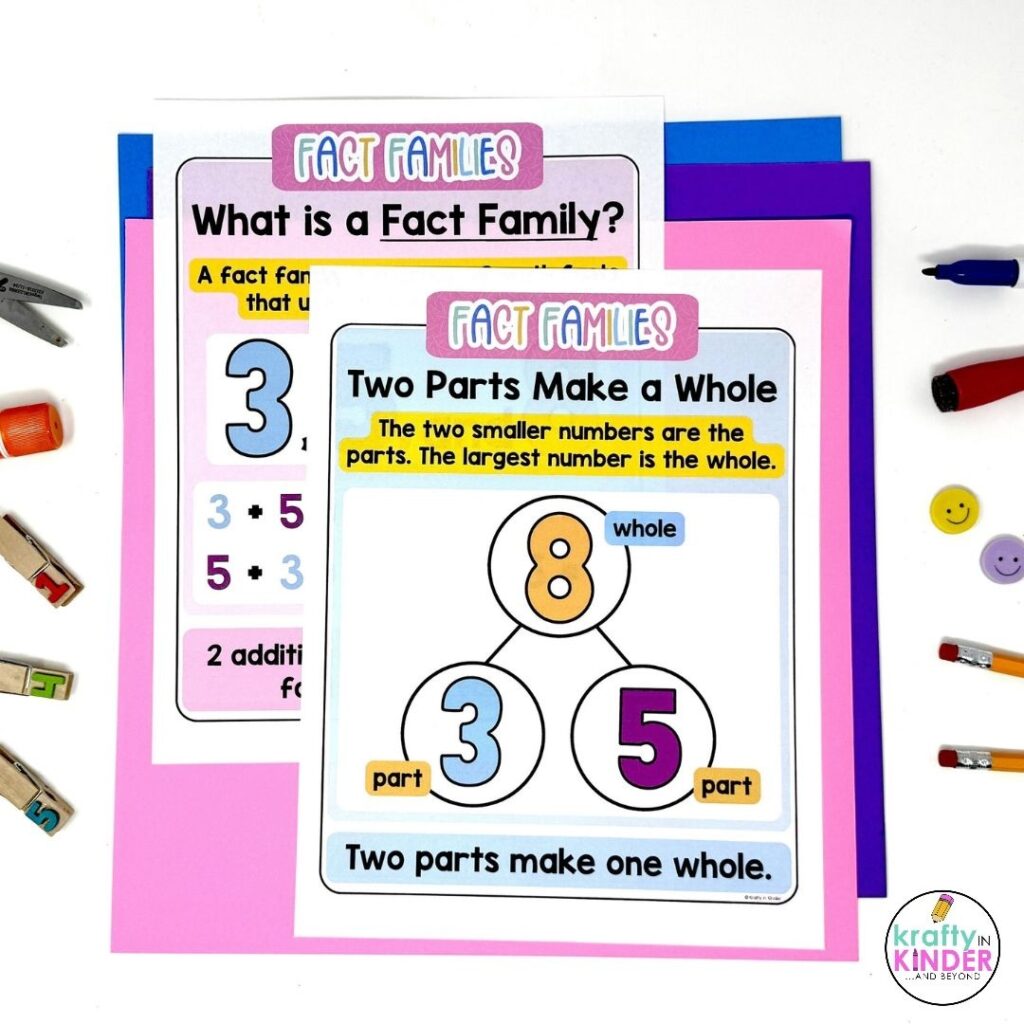
For example, 3, 5, and 8 belong to the same fact family because 3 and 5 combine to make 8. Here’s how this works:
3 + 5 = 8
5 + 3 = 8
8 – 3 = 5
8 – 5 = 3
Remember, the goal is to help students understand why these equations belong together, not just memorize the pattern. Start by teaching the relationship between the two parts and the whole, then gradually connect that understanding to number bonds, fact family triangles, and equations.
Ready for the nitty-gritty of teaching these concepts? Let’s get to it!
Start With Parts and Whole
Before introducing fact family triangles, give students something they can see and touch.
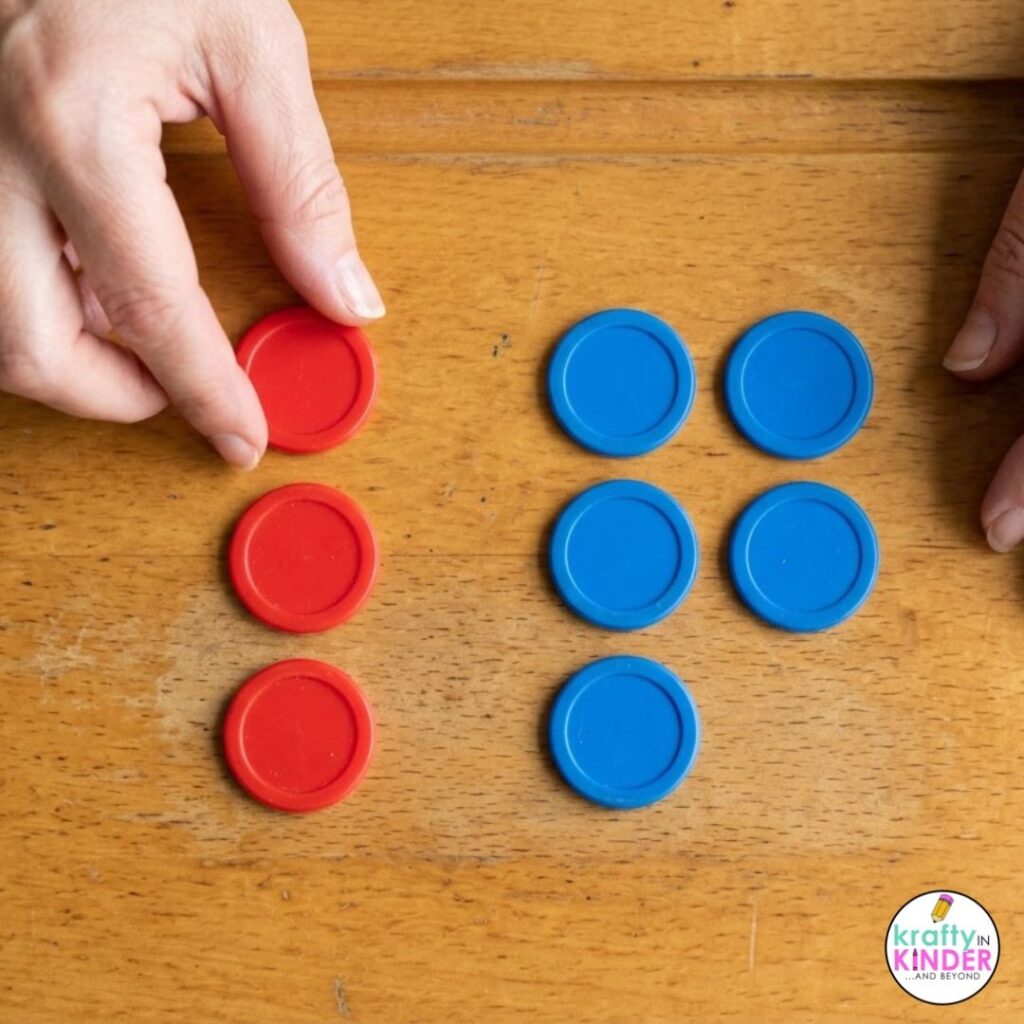
Place 3 red counters and 5 blue counters on a table. Ask students how many counters there are altogether. Once they identify the whole as 8, talk about the two parts: 3 red counters and 5 blue counters.
Model your thinking aloud: “I have 3 red counters and 5 blue counters. Those are my two parts. When I put them together, I have 8 counters altogether. Eight is my whole.”
Then ask, “If we have 8 counters and take away 3, how many are left?”
Have a student remove the red counters and count the 5 remaining blue counters. Repeat the process by taking away the blue counters to show that taking away 5 leaves 3.
This simple activity introduces the relationship between addition and subtraction without requiring students to memorize equations.
Check for Understanding
Before moving on, give students 8 counters, 3 red and 5 blue, and ask them to make two groups. Have them identify the whole and the two parts. You might ask, “How do you know 8 is the whole?” or “What happens if we put the two parts back together?”
A successful explanation might sound like this: “Eight is the whole because that’s how many counters I have altogether. Three and five are the parts because they make eight when I put them together.”
If students aren’t sure, return to the counters and physically combine the two groups. Model the explanation again, then let students practice with a partner.
Introduce Number Bonds and Fact Family Triangles
Once students understand parts and whole, show them how the same relationship can be represented in different ways.
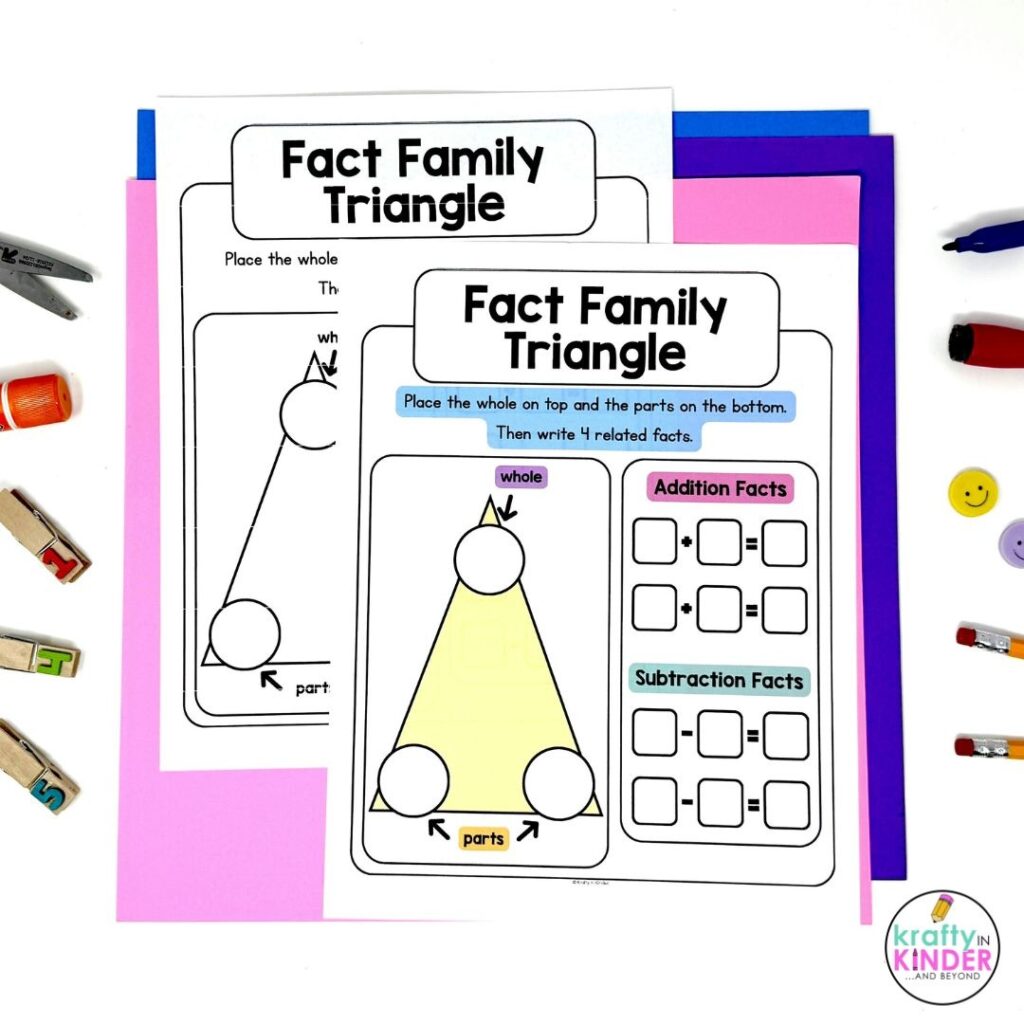
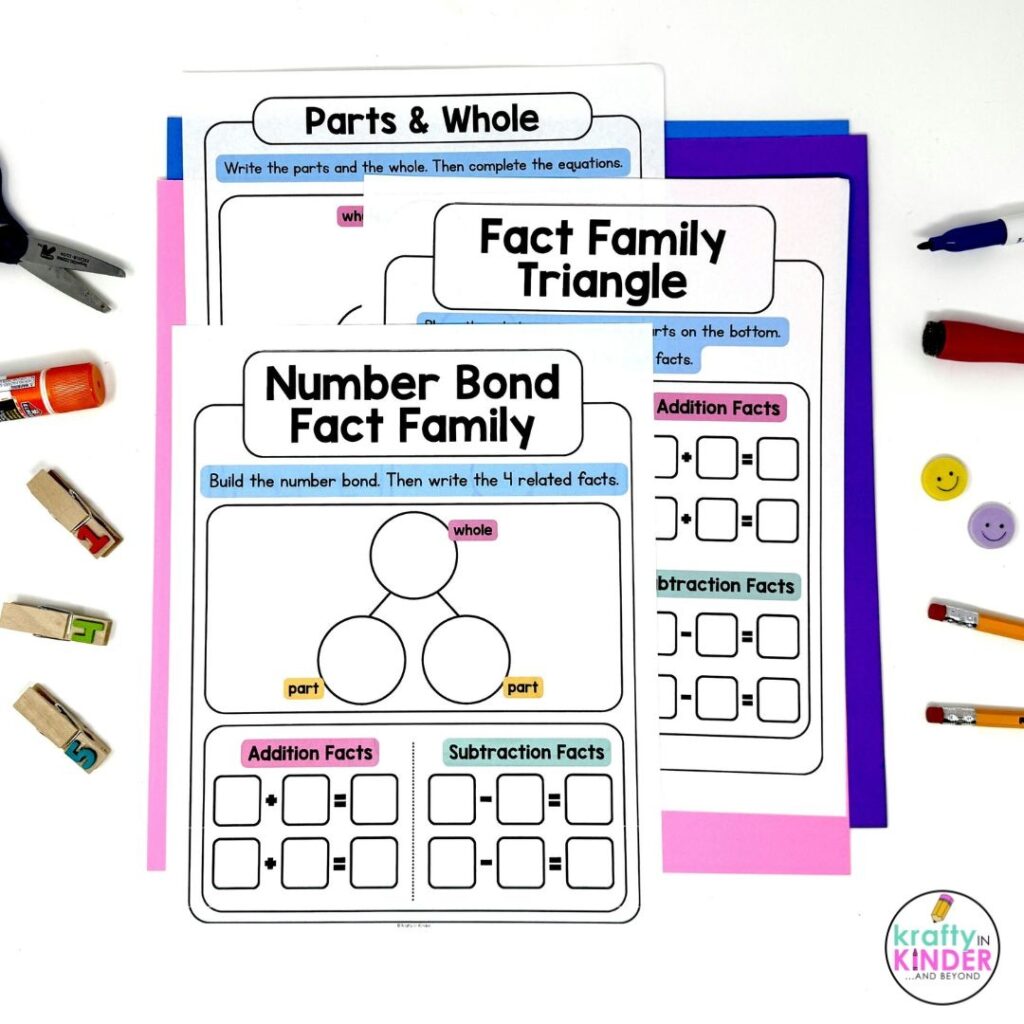
Start with a number bond. Write 8 in the whole circle and 3 and 5 in the two part circles. Explain that the two smaller numbers combine to make the whole.
Next, draw a fact family triangle. Place 8 at the top and 3 and 5 in the bottom corners. Explain that the triangle shows the same relationship as the number bond, just in a different format.
Model how to use the triangle to write the four related equations. Point to the two bottom numbers first and say, “The parts are 3 and 5. When I add them, I get the whole, 8.” Write 3 + 5 = 8. Switch the order of the parts to write 5 + 3 = 8.
Then explain that subtraction starts with the whole because we’re taking away part of the total. Write 8 – 3 = 5 and 8 – 5 = 3, pointing to the numbers in the triangle as you go.
Have students help you write the equations before asking them to try independently.
Check for Understanding
Cover one number in the triangle and ask students what information they would need to find it. Then give students three number cards and have them decide which number belongs at the top and which two belong at the bottom.
If students place the numbers incorrectly, return to the number bond and ask them to show which numbers combine to make the whole. Once they can explain that relationship, try the triangle again.
Teacher Tip: Keep the number bond and triangle visible during practice. Students can refer to these models as they become more confident working independently.
Start With the Free Fact Families Starter Kit
Want to try this approach with your students? Grab my free Fact Family Starter Kit when you enter your email below for a simple introduction to fact families and a chance to practice how three numbers work together.
Inside, you will get resources to introduce fact families and fact family triangles, plus practice worksheets to get started.
Connect Addition, Subtraction, and Missing Addends
Once you’ve covered the basics, consider how fact families can help when students begin working with missing numbers. For example, a student might solve 6 + 7 = 13 but struggle with 13 – 6 = _____. Encourage them to think about the related addition fact.
Model your thinking aloud: “I know 6 and 7 make 13. If I start with 13 and take away 6, I’m left with the other part, which is 7.” You can practice this connection with a quick missing-number activity:
6 + _____ = 13
13 – 6 = _____
_____ + 7 = 13
Ask students to use counters, number bonds, or their fact family triangles to solve each equation. Then have them explain how the same three numbers help them find each answer.
A student who understands the connection might say, “The missing number is 7 because 6 and 7 make 13. If I take 6 away from 13, I have 7 left.”
If students struggle, build 13 with counters and physically remove 6. Then connect what remains to the missing number in the equation.
As students gain confidence, introduce addition and subtraction within 20. Start with facts within 10 for students who need more support, and gradually increase the numbers when they’re ready.
Watch for Common Fact Family Mistakes
A few common misconceptions can tell you when students need another hands-on lesson.
Students think any three numbers belong together.
Give them number sets such as 3, 4, and 7 alongside 3, 4, and 8. Ask them to prove which set forms a fact family using a number bond or counters. If they choose 3, 4, and 8, have them combine the two smaller groups to see whether they make 8.
Students start subtraction with a smaller number.
Remind them that subtraction starts with the whole. Have them point to the whole in the number bond or fact family triangle before writing an equation. If needed, model taking a part away from the whole using counters.
Students struggle when a number is missing.
Mix up the position of the missing number instead of always leaving the answer blank. Let students use the same visual models to solve each equation. Ask them to explain what they know and what they need to find.
Students can write the equations but cannot explain the relationship.
Return to the concrete models instead of giving them more equations to memorize. Ask, “Can you show me the two parts? Can you show me the whole? How do those numbers help you write a subtraction fact?”
These small adjustments help students focus on how the numbers are related instead of memorizing one problem format.
Give Students Different Ways to Practice Fact Families
Once students understand the concept, use short activities to reinforce their learning without repeating the same worksheet every day. Here are a few of my favorite options:
Play Fact Family Match Up
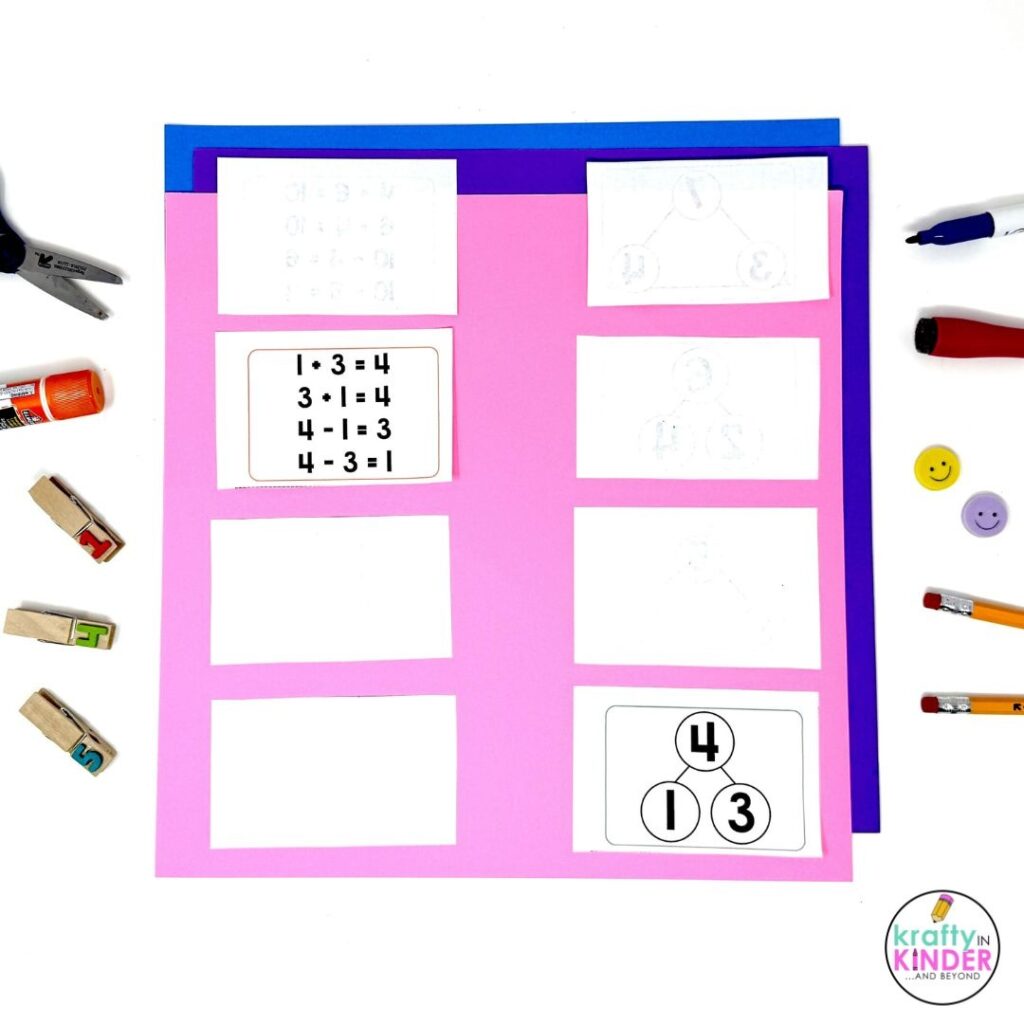
I love the fact family center activity in this resource because it’s a simple hands-on learning game that students love. They will match up number bond/fact family triangle cards to their coordinating facts. This is great for partner work!
Build a Fact Family
Give students three number cards and have them write the four related equations. Ask them to explain how they know the numbers belong together.
Try Digital Learning
Try incorporating digital game options like these BOOM Cards to offer new ways to practice fact families during centers, small groups, and independent learning time.
Solve a Story Problem
Tell students, “There are 12 birds in a tree. Five fly away. How many are left?” Ask students to solve the problem and write a related addition fact, too.
Use Crafts to Practice
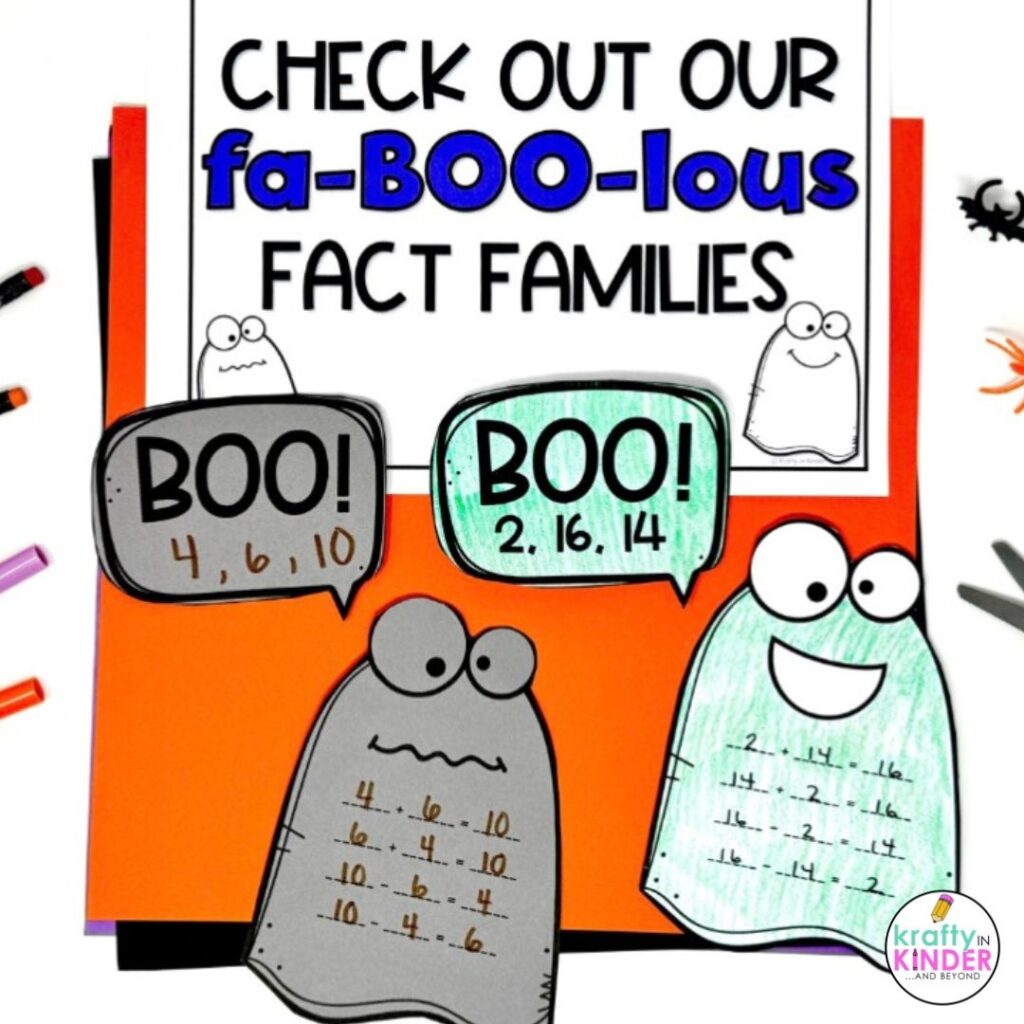
One of my favorite ways to make learning more fun is by adding a craft. In my room, we use these cute Ghost Fact Family Crafts to practice building sums to 10 and sums to 20.
Use Math Talks
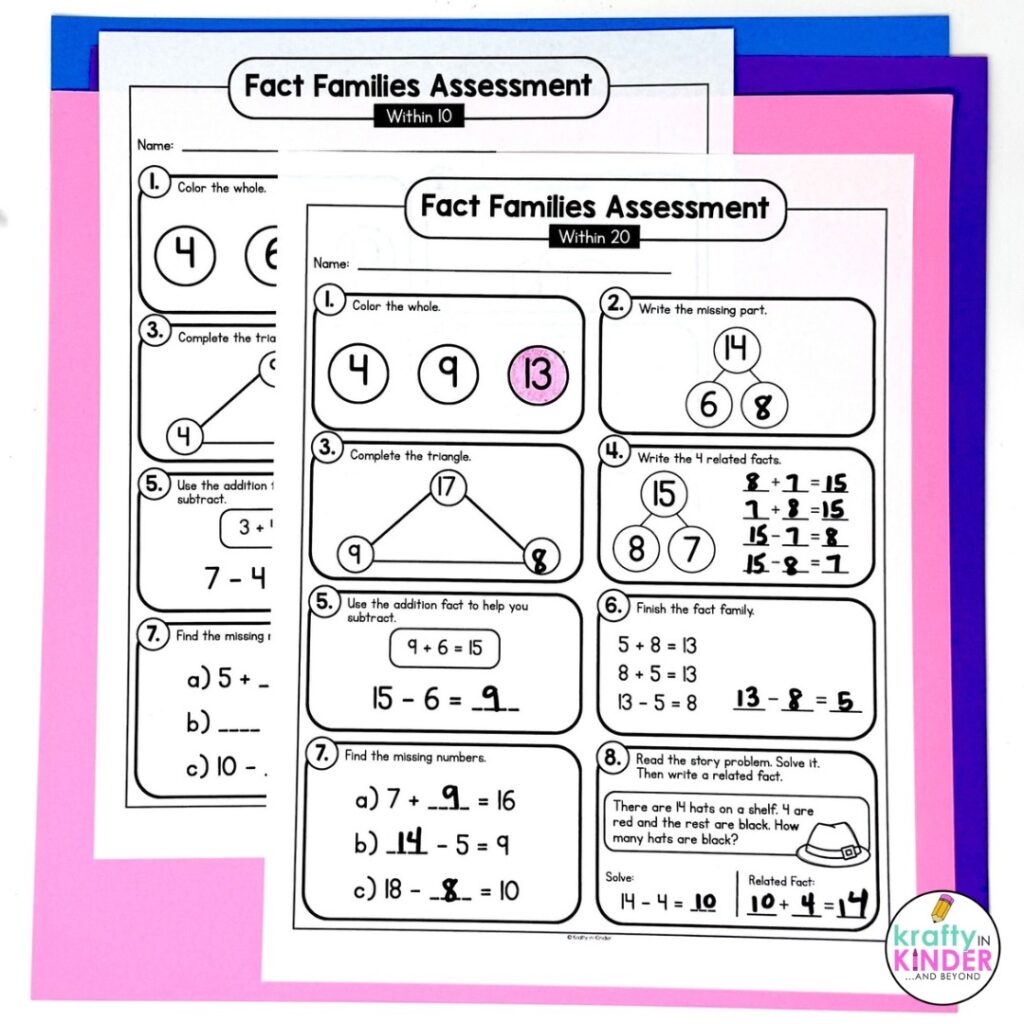
Ask students to write one fact family and explain how they know the equations belong together. Look for three things: they identify the correct whole and parts, write related addition and subtraction equations, and explain how the numbers connect.
These activities work well during whole-group instruction, math centers, small groups, or independent practice. You can also use a quick check at the end of a lesson to decide which students are ready for more challenging facts and which need additional support.
Make Fact Family Lessons Easier to Plan
As we discussed, once students understand how parts and whole work together, they’ll need plenty of opportunities to practice with related equations, missing numbers, and story problems. Having a variety of activities ready makes it easier to reinforce the concept without creating everything from scratch.
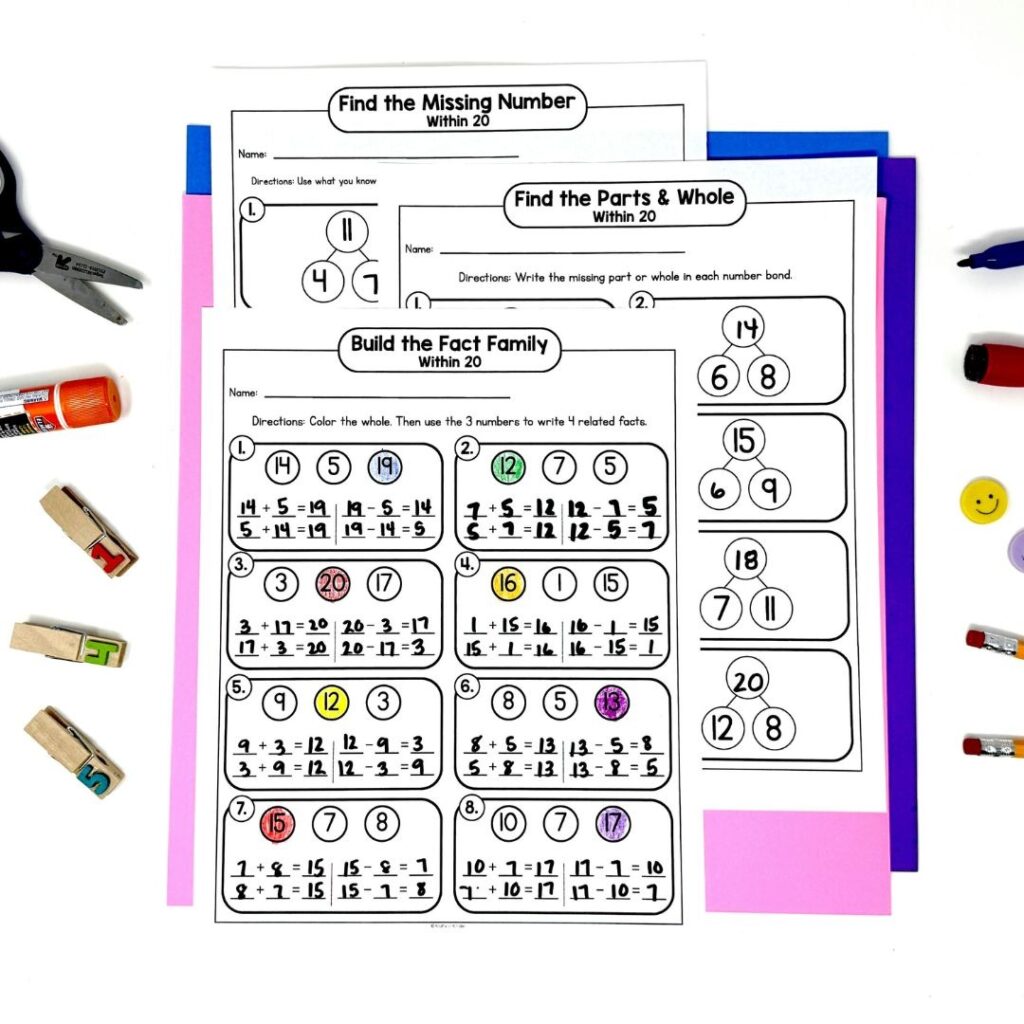
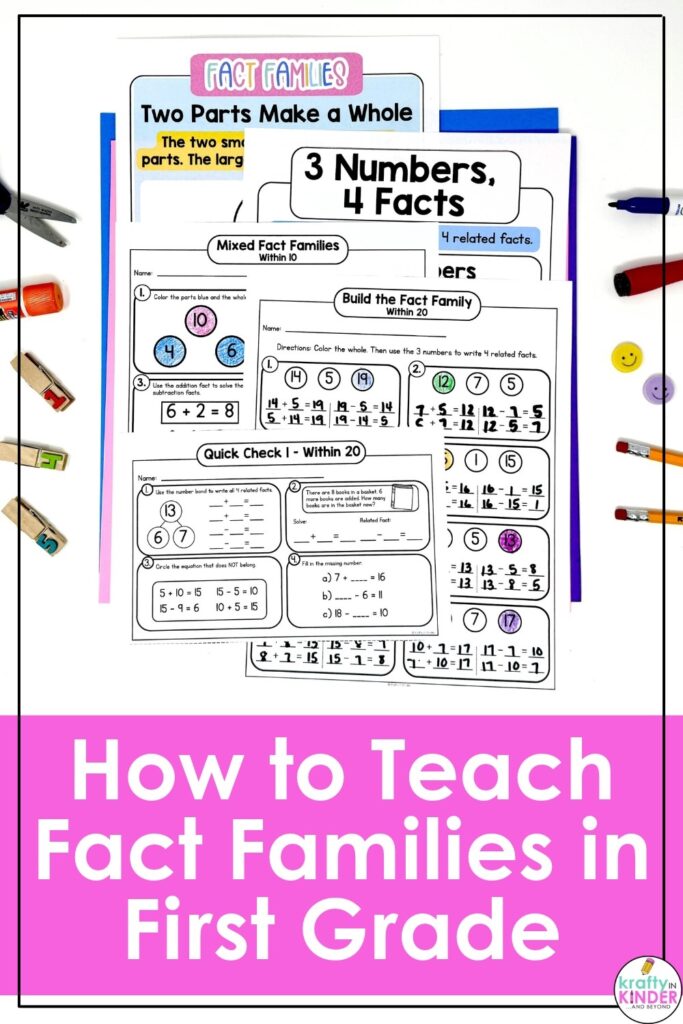
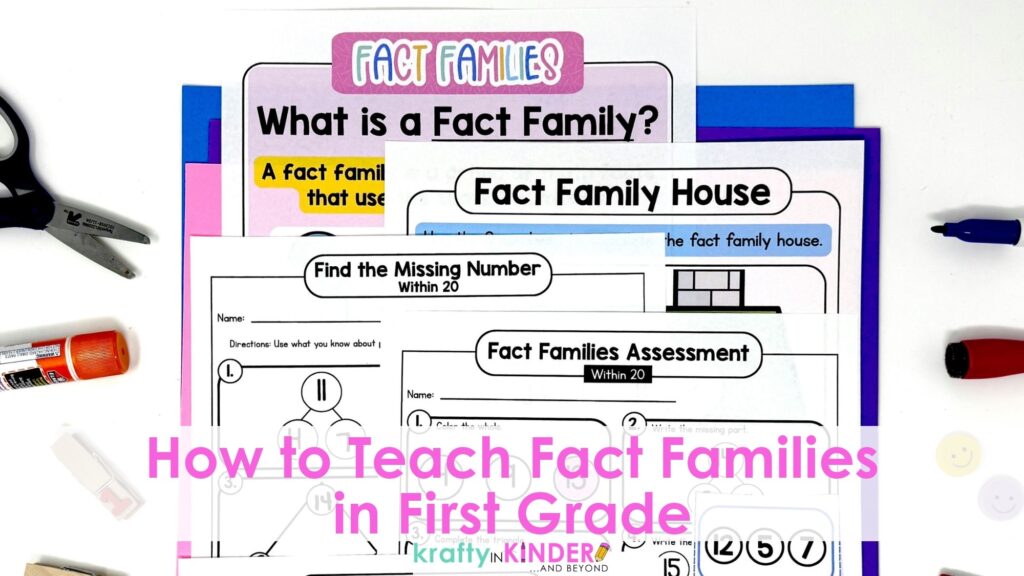
My Fact Families Activities & Worksheets resource brings that practice together with everything you need to keep lesson planning simple. Here’s a look at what’s included:
- 6 Posters & Anchor Charts
- 20 Fact Family Worksheets
- 2 Centers/Games (including the Fact Family Match Up mentioned above!)
- Fact Family Story Problems
- 4 Half-Page Quick Checks
- 2 Assessments
- Teacher Guide, Suggested Teaching Sequence, directions & answer keys
With options for facts within 10 and within 20, you can choose activities that match your students’ needs. Plus, the included teacher guide and suggested teaching sequence also help you move from introducing parts and whole to independent practice!
It’s the perfect option to streamline your fact family lessons while giving students plenty of opportunities to build understanding, practice related equations, and show what they know. Whether you’re planning whole-group instruction, small-group lessons, or independent math centers, you’ll have a variety of ready-to-use activities at your fingertips.
Make Teaching Fact Families Fun
Teaching fact families doesn’t have to mean creating endless activities or repeating the same four equations. With the right mix of hands-on practice, visual models, and meaningful activities, you can help students better understand how numbers work together.
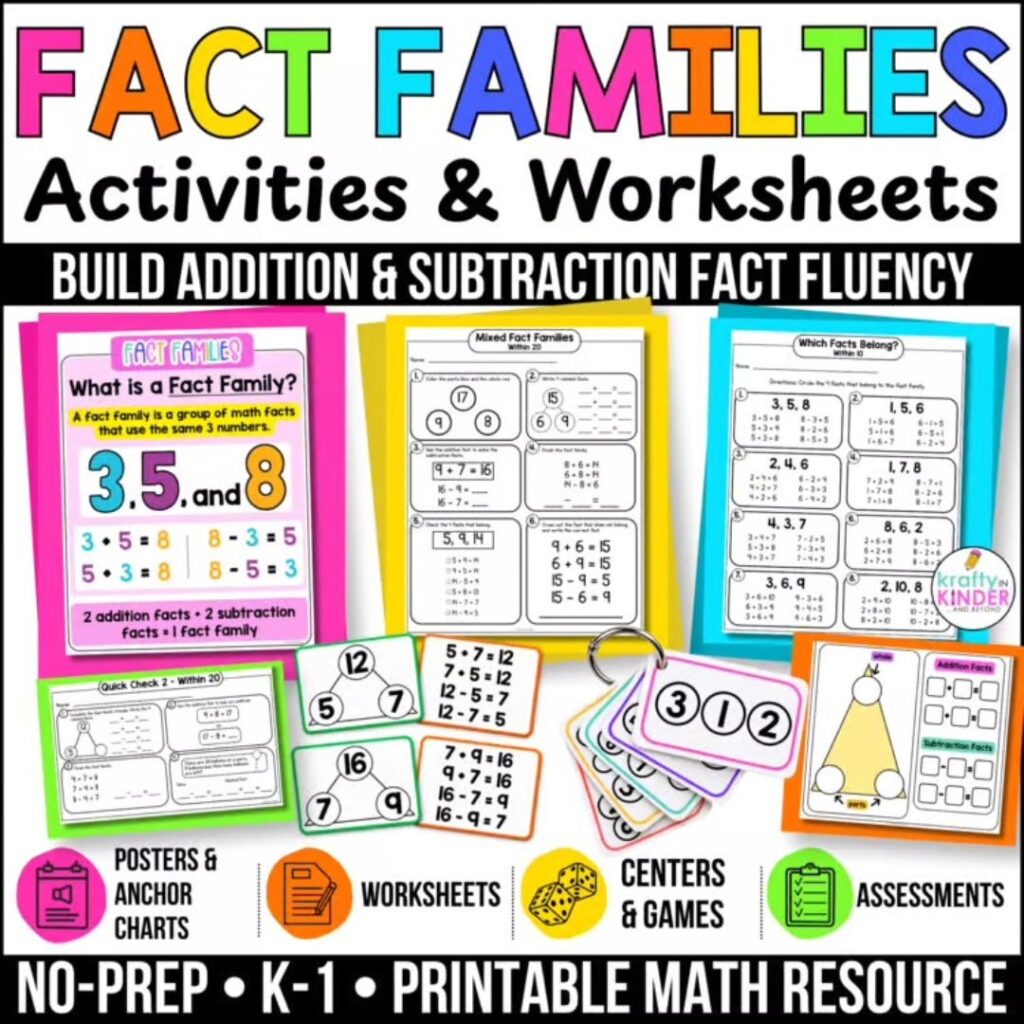
Ready to make planning a little easier? Take a look at my Fact Families Activities & Worksheets resource and find everything you need to teach, reinforce, and assess fact families in one convenient place!
Looking for More Primary Math Support?
Check out these posts next!
- Festive Fall Math Games for First Grade
- Make Word Problems Fun With a Winter Math Craft
- Math Games Make Mastering Addition Easy in First Grade
Save This Post!
Not quite ready to teach fact families in your room? No problem! Save this post on Pinterest and come back to it later.