How to Build Reading Stamina in Kindergarten and First Grade
Your students are settled with their books during independent reading, and for a few glorious minutes, everyone is reading! Then someone starts flipping through pages without really looking at the words. Another student is wandering around the classroom. And before you know it, you’re answering questions and redirecting students instead of meeting with your reading group. Yup. . . this is why building reading stamina matters so much! Come along to learn how to make it happen in your room.
Why Reading Can Feel Hard for Primary Learners
Building reading stamina takes time, especially in kindergarten and first grade. Young readers are still learning how to choose books, stay focused, work through tricky parts, and keep reading without an adult right beside them.
The good news? Reading stamina is a skill you can explicitly teach and practice with your students.
You might be introducing independent reading at the beginning of the year, getting back into routines after winter break, or noticing that your classroom reading time has become a little less productive. These strategies can help your students build confidence and independence one step at a time!
First, What Is Reading Stamina?
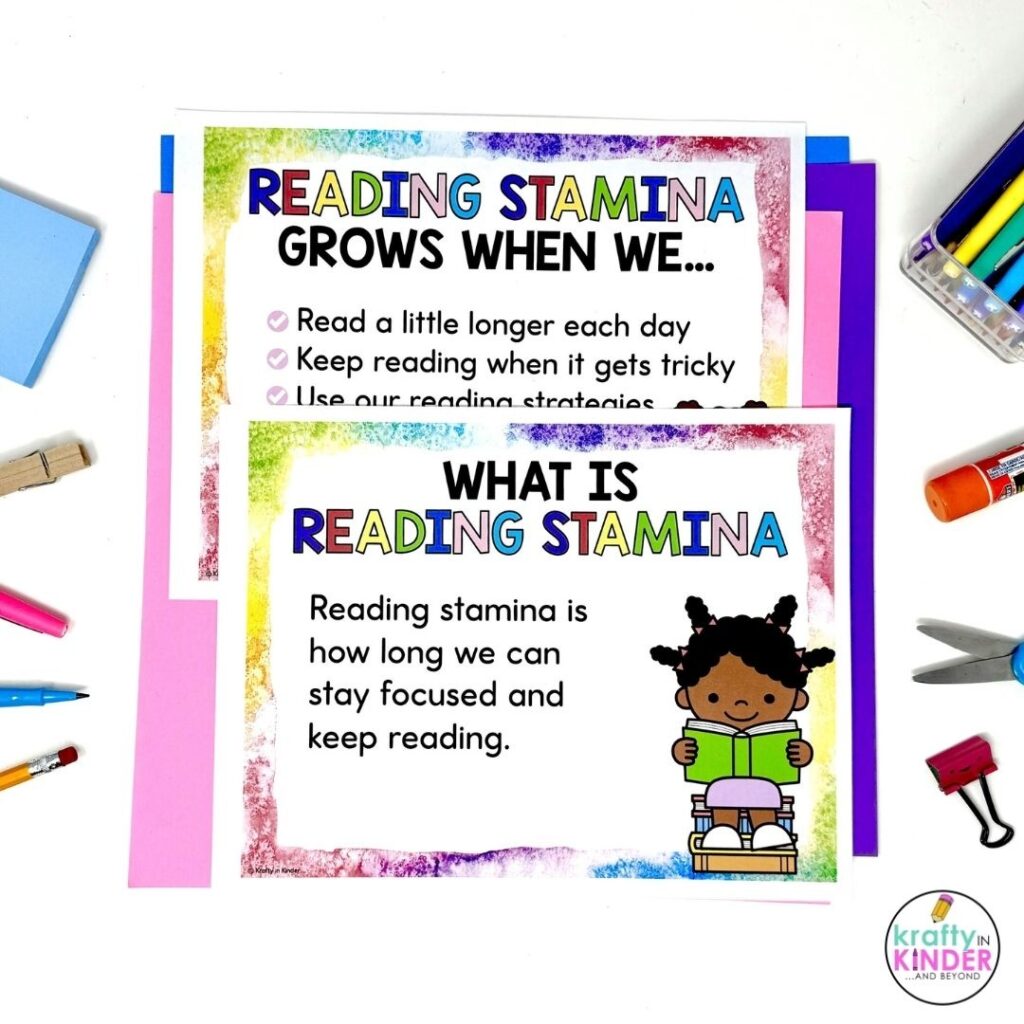
Reading stamina is a student’s ability to stay focused and engaged in reading for longer and longer periods. But it’s not just about sitting quietly with a book.
Students need to learn what active reading looks like, what to do when they get distracted, and how to keep going when a book becomes challenging.
For kindergarteners and first graders, that can mean looking carefully at the pictures, tracking words from left to right, rereading a familiar book, or trying a strategy when they come to a word they don’t know.
Think of reading stamina like building a muscle. Students aren’t expected to read independently for 20 minutes on the first day. They need opportunities to practice, experience small successes, and gradually work toward longer periods of focused reading.
The key is to teach these expectations directly, not assume students already know what to do.
Why Is Reading Stamina So Important?
Independent reading gives students valuable time to practice the skills they’re learning during whole-group and small-group instruction. But that practice is most helpful when students are actively engaged with their books.

When students develop reading stamina, they become more comfortable managing their own reading time. They learn how to settle into a routine, work through distractions, and keep trying when reading feels tricky.
Strong independent reading routines also make your literacy block run more smoothly. You can spend more time listening to students read and providing targeted instruction to your small reading groups instead of constantly redirecting the rest of the class.
And remember, reading stamina doesn’t look the same for every student. One child might be ready to read independently for 10 minutes, while another is still working toward three focused minutes. Both students can make progress when you set realistic goals and celebrate growth.
How to Teach Reading Stamina Step by Step
If you’re ready to help your students become more independent readers, a plan helps. Instead of setting a timer and asking students to read longer, teach the habits that make independent reading successful.
In my room, I use the Reading Stamina Mini Lesson and Activities set that makes that whole process much easier. Here’s how you can use this resource to introduce reading stamina and help your students build on those skills throughout the year.
Step 1: Introduce Reading Stamina
Start with a mini lesson to help students understand what reading stamina means and why it matters. Discuss what it looks like when readers stay focused for all of reading time. Give examples of what can happen when they lose focus or give up when reading gets tricky.
Use examples of strong and weak reading habits to get students thinking. Ask questions like, “What does a focused reader look like?” and “What could you do if you come to a word you don’t know?”
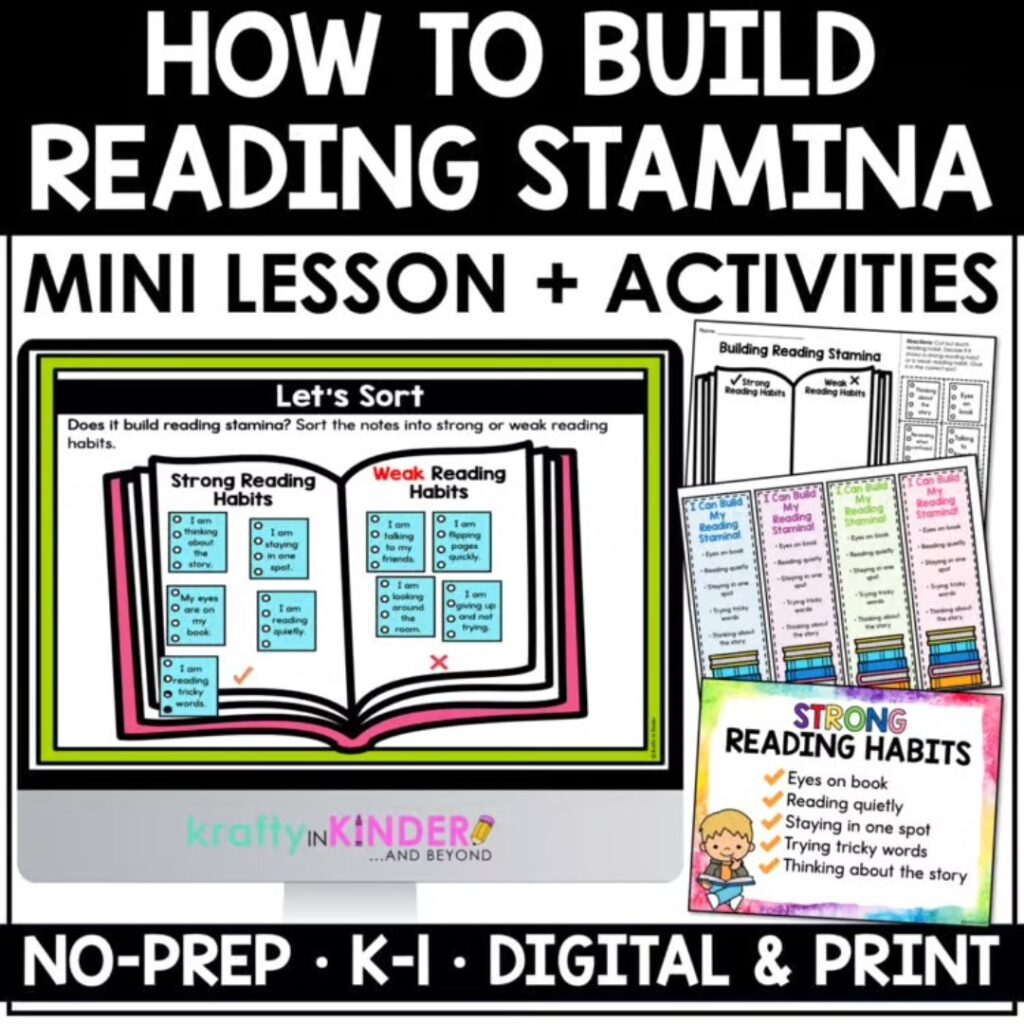
The Google Slides mini lesson in the Building Reading Stamina Lesson teaches these ideas with age-appropriate discussion and interactive activities. It gives you a simple way to introduce the concept before students begin practicing on their own.
Step 2: Practice Identifying Strong Reading Habits
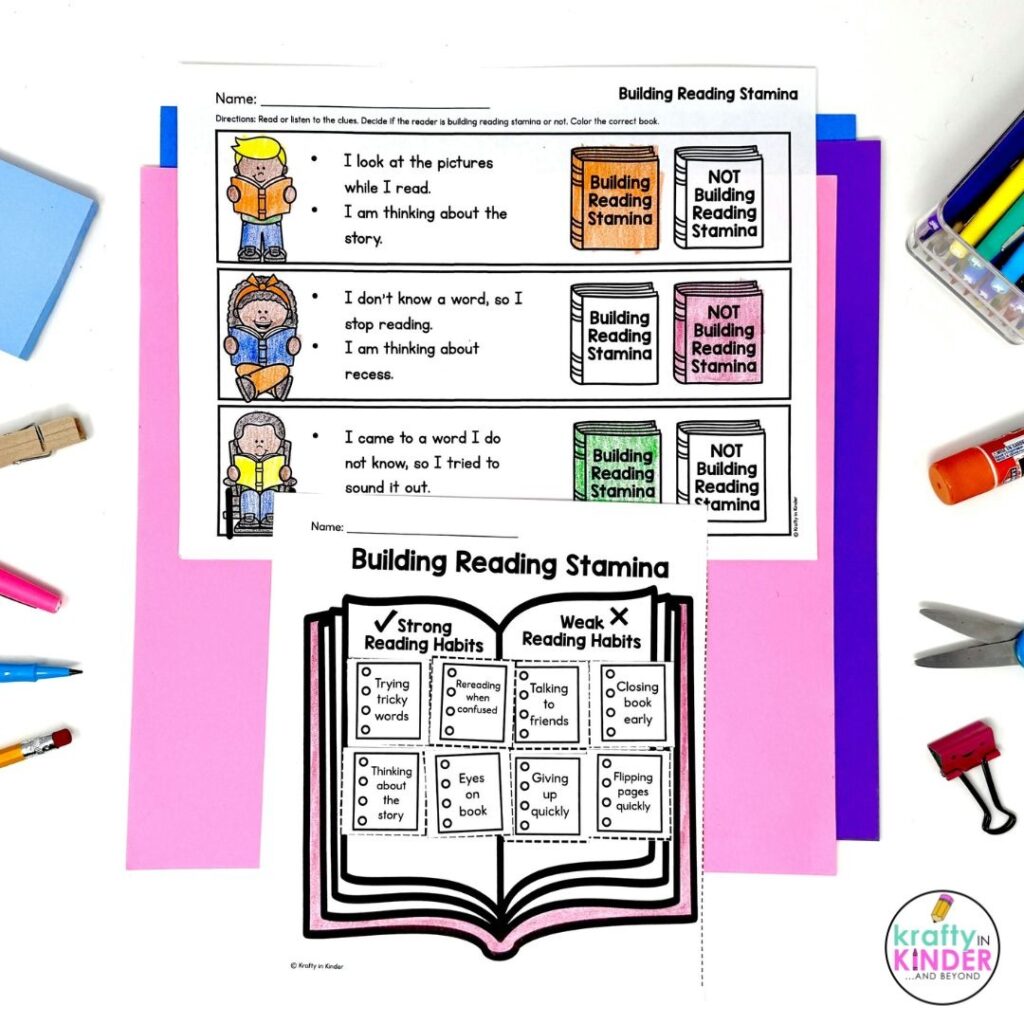
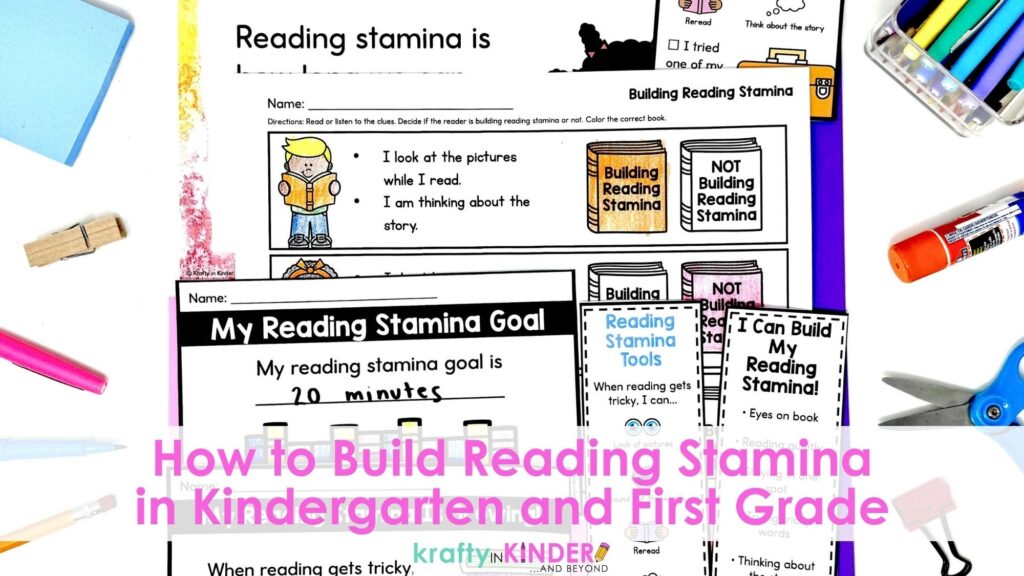
Before students can build reading stamina, they need to understand the behaviors that help them stay engaged. We use a reading habits sort to help distiguish choices that support independent reading and choices that interrupt it.
Students identify looking carefully at the pages, trying a strategy when a word is tricky, and staying in their reading spot as strong reading habits. Walking around the room or talking to a neighbor during reading time would be examples of habits that need work.
Complete the sort together as a whole class, use it with a small group, or let students practice independently. As you discuss each example, ask students to explain why a behavior helps or hurts reading stamina.
Step 3: Show Students How Reading Stamina Grows
Young readers need to understand that reading stamina develops with practice. They might not be able to read independently for very long at first, and that’s okay! The goal is to make progress over time.
This is when I like to introduce a class reading stamina tracker and begin recording how long your students can read while following classroom expectations. Celebrate small improvements! Whether your class adds another minute or simply stays focused better during the time they already have.
You can also give students individual trackers or bookmarks to monitor their own progress. These visual reminders help students see that their effort matters and that everyone is working toward growth.
Step 4: Teach Strategies for Tricky Reading Moments
Even engaged readers get distracted or come across words and passages that feel challenging. What matters is knowing what to do next.
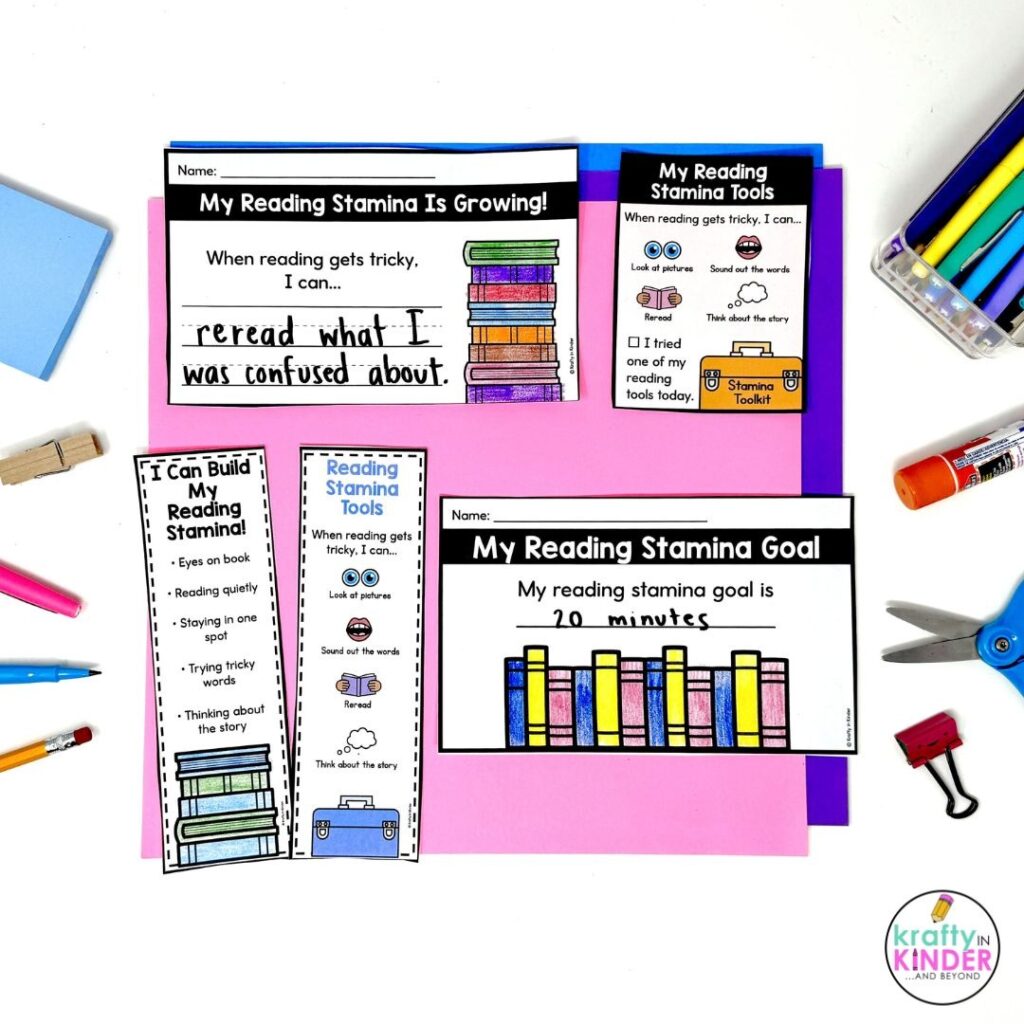
Introduce a few simple reading strategies students can try when they feel stuck. They might use pictures for clues, reread a page, look at the beginning sound of a word, or return to a familiar book to rebuild confidence.
The reading stamina tools in the lesson include bookmarks, a desk card, and a mini anchor chart to remind students of their options. Keep these tools in reading folders, book bags, or another easy-to-reach spot so students can refer to them during independent reading.
Take time to model each strategy before asking students to use it independently. A quick think-aloud can show students exactly how a reader works through a tricky moment instead of giving up.
Step 5: Help Students Set Reading Goals
Once students understand reading stamina and have practiced using helpful strategies, invite them to set a personal goal.
Goals should be realistic and specific. One student might aim to stay focused for five minutes, while another might try a reading strategy before asking for help. You can help students choose a goal based on their current needs and celebrate progress as they work toward it.
The goal-setting pages included in the lesson give students a chance to think about what they want to improve. Revisit their goals regularly and adjust them as their skills develop. The purpose isn’t to make every student reach the same target at the same time. It’s to help each reader recognize their progress and identify a next step.
Step 6: Reflect on Reading Progress
Reflection helps students connect their daily practice with their growing independence. After independent reading time or a small-group lesson, give students a few minutes to think about how things went.
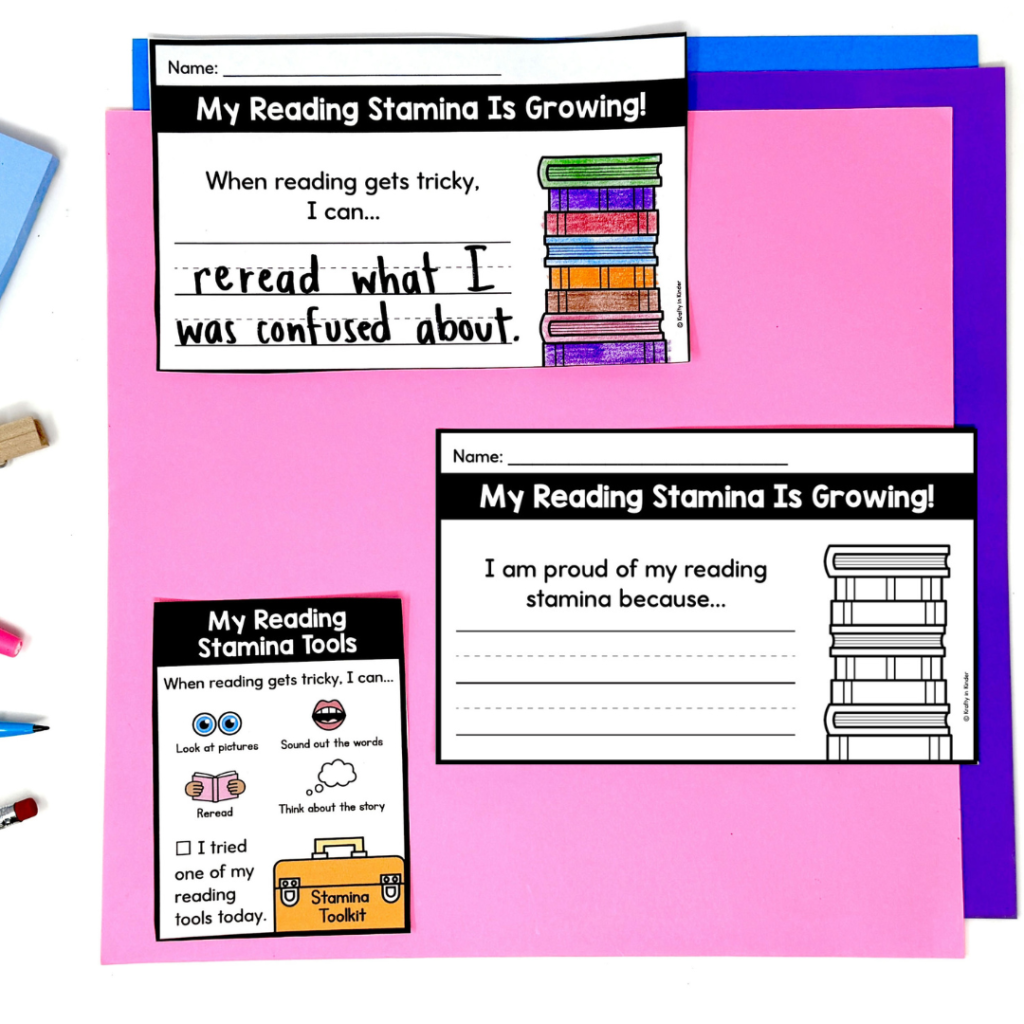
Ask questions such as, “What helped you keep reading today?” “What did you do when something felt tricky?” or “What is one thing you want to work on next time?”
The reflection pages give students a structured way to consider their stamina growth and the strategies they’ve used. You can also use them as a conversation starter during small-group instruction to help students recognize successes and decide what to practice next.
Over time, these quick check-ins help students become more aware of their reading habits and more confident in their ability to manage independent reading.
Add a Hands-On Reading Stamina Toolbox Craft
After teaching reading stamina and introducing strategies students can use during independent reading, give them a chance to practice those ideas with a hands-on activity.
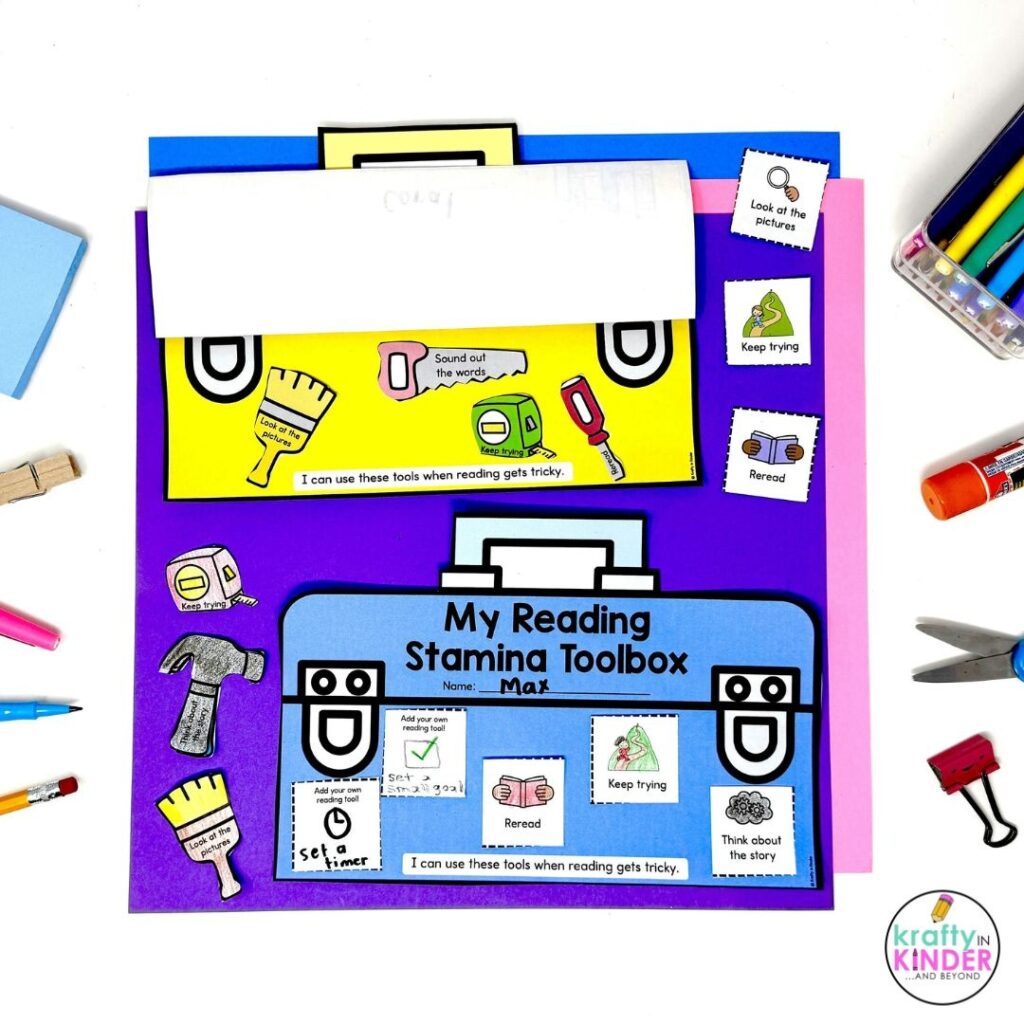
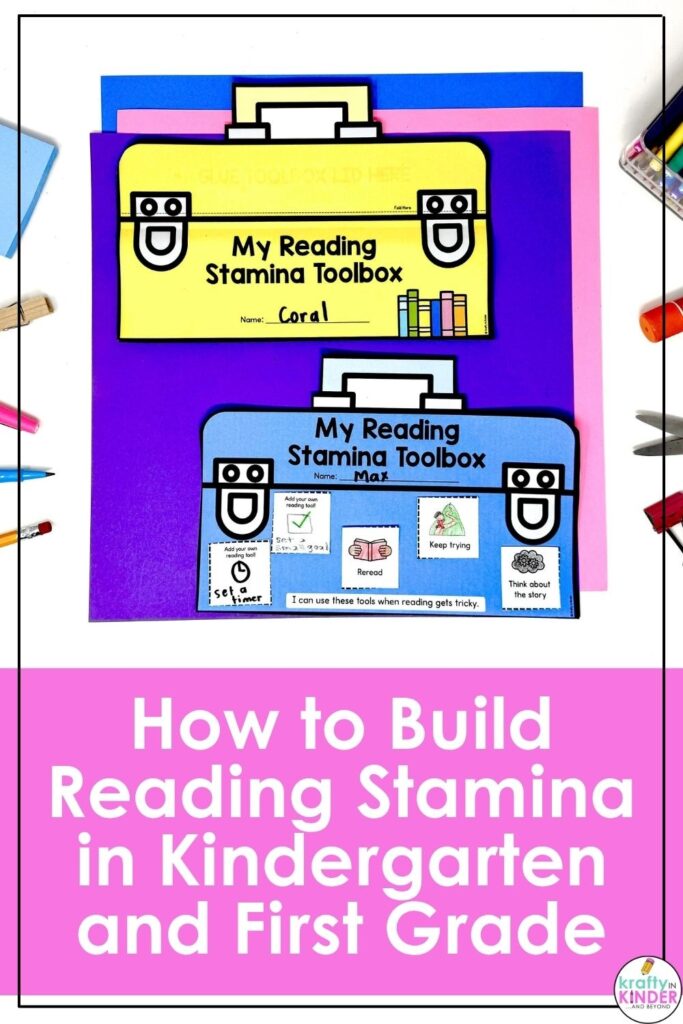
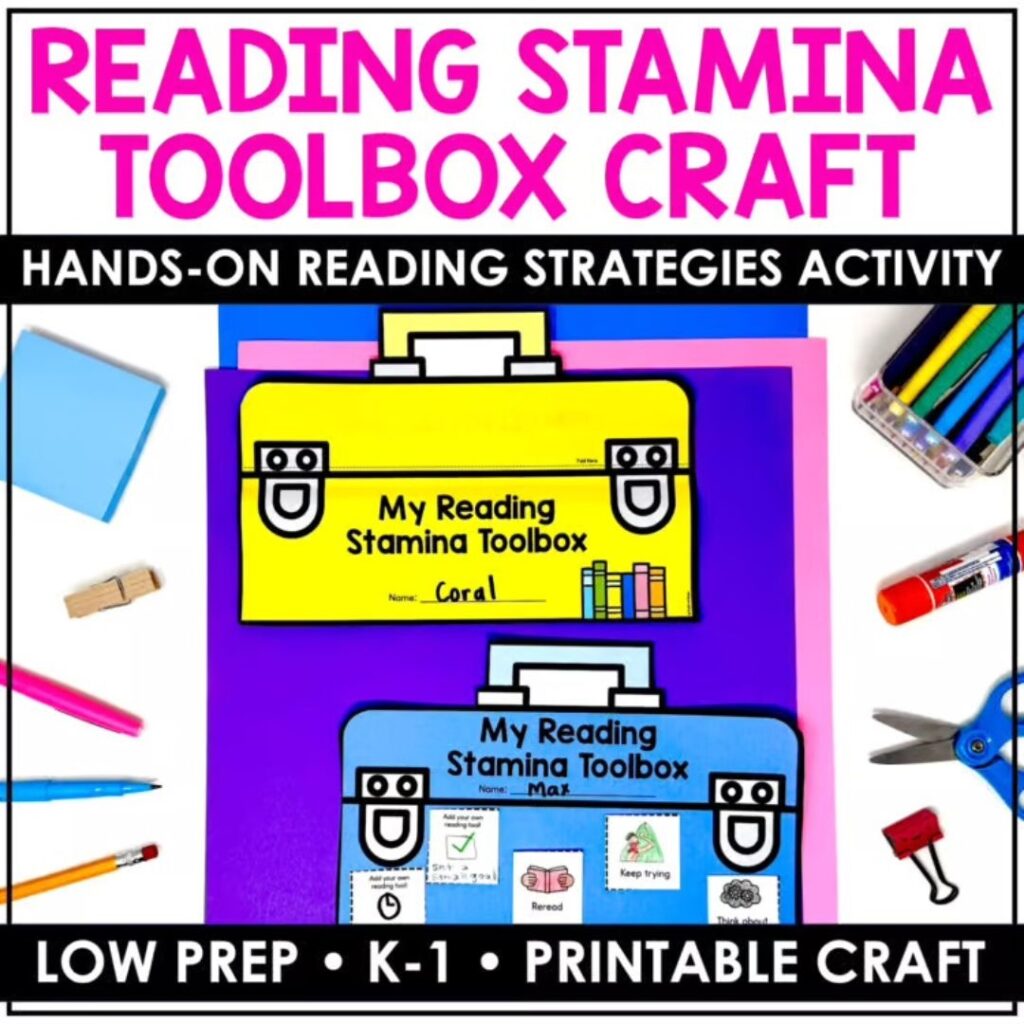
The Reading Stamina Toolbox Craft lets students create their own toolbox filled with reminders of strategies they can use when reading gets tricky. It’s a fun way to reinforce your mini lesson while giving students a visual reminder they can revisit throughout the year.
Start by reviewing the strategies you’ve already taught. Talk about what readers can do when they feel distracted, come across a tricky word, or want to give up on a book. Then, as students assemble their toolboxes, discuss what each strategy means and when they might use it.
The craft includes a foldable toolbox, a simple cut-and-glue version, and strategy tools in color and black-and-white options. Choose the format that works best for your students and the time you have available.
This activity can stand on its own as a reading strategy craft or work as a follow-up to the Building Reading Stamina Lesson. It gives students another opportunity to talk about good reading habits and reminds them that successful readers don’t have to know every word right away. They can use strategies, keep trying, and grow with practice.
Use the Reading Stamina Lesson Pack for a Simple Solution
If you’re looking for a way to make teaching reading stamina skills easier, the Building Reading Stamina Lesson Pack is just what you need!
Reading stamina develops through consistent practice. One lesson is helpful, but students need regular opportunities to apply what they’ve learned, and this lesson pack covers all of it! It includes:

- Google Slides Mini Lesson with discussion and interactive activities
- Reading Habits Sort (print + digital)
- Stamina Tracking Pages (class poster + individual options)
- Goal Setting and Reflection Pages
- Classroom Posters and Strategy Tools
- Student Bookmarks
- Teacher Lesson Guide
- Parent Connection Page
With printable and digital options, you can introduce the skills and continue reinforcing them throughout the year!
Try building a predictable routine into your reading workshop. Before students begin, briefly review the class goal and one reading strategy. Give them time to choose their books and settle into their reading spots. Then start the timer and let them practice.
And if some students loose progress after winter break, a long weekend, or a busy stretch of the school year, don’t worry. They haven’t forgotten everything! Simply revisit your expectations, model the routine again, and return to a reading goal your students can manage successfully.
Help Your Young Readers Grow One Minute at a Time
Building reading stamina takes time, especially for kindergarten and first grade students who are still learning what it means to read independently. By explicitly teaching reading habits, modeling strategies, tracking progress, and setting realistic goals, you can help students become more confident and engaged readers.
Start with a manageable goal, celebrate small wins, and revisit your routines whenever your class needs a reset. Those focused minutes add up, helping your students build the skills they need to keep reading, even when things get tricky.
And don’t forget, the Reading Stamina Lesson Pack and Reading Stamina Craft are great resources to help make this whole process easier! Grab them today to simplify your lessons!
Looking for More Teaching Tips to Support Reading?
Read these posts next!
- How to Use Cloze Reading Activities to Improve Reading Comprehension
- Your Stress-Free Guide to Planning an Engaging Reading Week
- How To Use Decodable Reading Passages
Pin It!
Make sure to pin this post on Pinterest so that you can come back to it when you’re ready to plan your reading stamina lessons!