How to Teach Nouns, Verbs, and Adjectives in K-2 (Without Losing Your Mind)
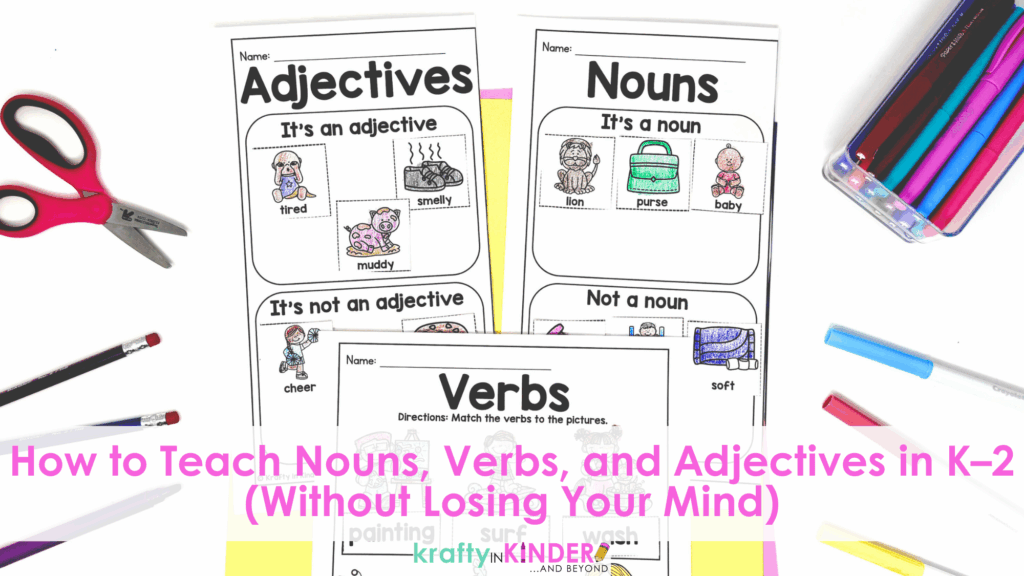
Ever had students identify nouns perfectly one day… then stare blankly at you the next? Yep, I’ve been there! Teaching nouns, verbs, and adjectives in the primary grades can feel like an endless cycle of teaching followed by your students promptly forgetting the lesson. And honestly, it’s not because students can’t learn these concepts. It’s because they need multiple exposures, visuals, and meaningful practice to truly make the connection. Ready to make this shift and see grammar lessons finally stick? I’ve got your back!
Why Teaching Nouns, Verbs & Adjectives is Crucial
Understanding parts of speech lays the groundwork for reading comprehension, sentence writing, and eventually stronger oral and written expression. When students know how nouns, verbs, and adjectives function in sentences, they can:
- Build and expand sentences
- Write with descriptive detail
- Understand how words relate to each other
- Write in more detail with clarity and confidence
This is a foundational skill in the primary years, but it’s also one that continues to matter long after students move up to higher levels. How we approach it now truly matters, and with a clear teaching routine and the right materials, it doesn’t need to be stressful or complicated. Ready to see my 3-step method? Let’s go!
Step One: Teach the Concepts with Digital Slides
Begin by introducing each part of speech during whole-group instruction, where you can model, think aloud, and build shared understanding. My favorite way to do this is with this Digital Parts of Speech Lesson. It makes our introduction super easy because everything is already organized and interactive. I project the slides up on the interactive whiteboard and read aloud as we move through each one. This lesson includes:
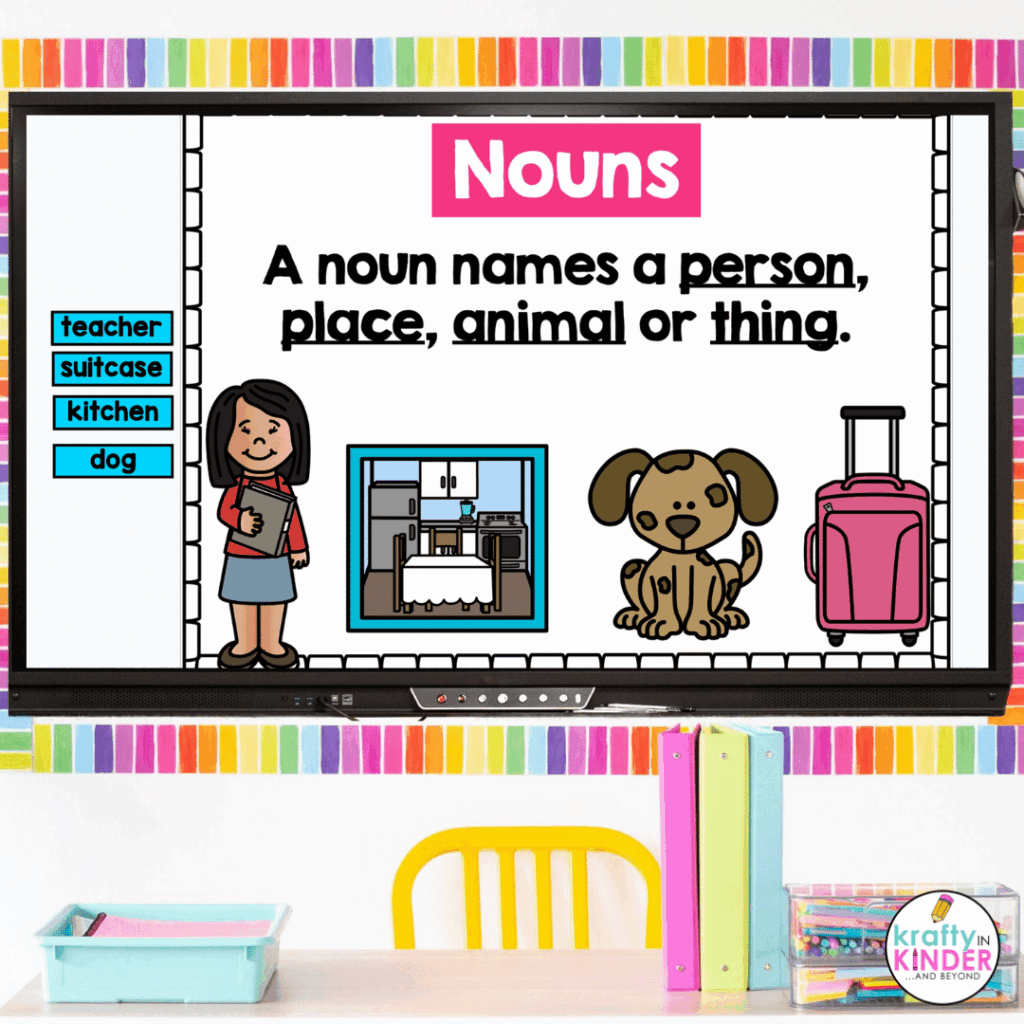
- Clear explanations of nouns, verbs, and adjectives
- Visual examples and picture hunts
- Sorting tasks
- Sentence highlight activities
- Silly sentence building
- A drag-and-drop grammar game
There are 44 pages total with definition pages, games, and examples to help nouns, verbs, and adjectives truly stick! As you work through each slide together, students get multiple opportunities to see, identify, and use each part of speech. This goes well beyond simply memorizing the definition! And. . . because the activities are interactive, students stay engaged while you guide and support them.
Multiple Ways to Use Digital Nouns, Verbs, and Adjectives Slides in Your Classroom
One of my favorite things about these digital slides is that they can be used in multiple ways! Hooray for a multi-use resource, right?!
Whole Group Teaching
I recommend that you use the teaching slides to model each concept during your whole group introduction. I like to project these on the interactive whiteboard for this step.
As you go through the slides, focus on one part of speech first and work through the included examples. Make sure your kids nail it before moving on to a new one!
Small Group Guided Practice
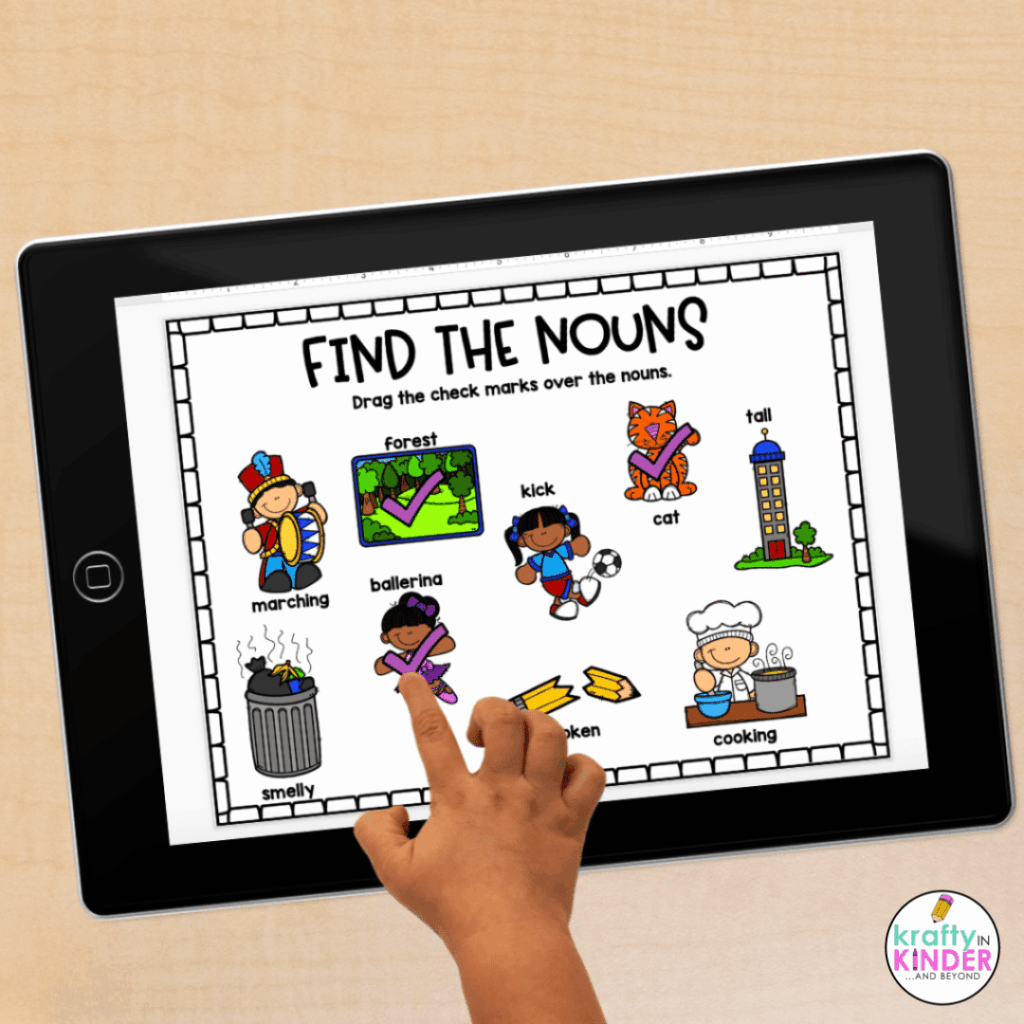
Then, use the follow-up interactive slides as an activity for small group guided practice, intervention support, a digital center, and even homework or early finisher practice. The options are truly endless, and you can revisit the slides as many times as you need to ensure everyone has a clear understanding.
Step Two: Reinforce and Apply in Small Groups
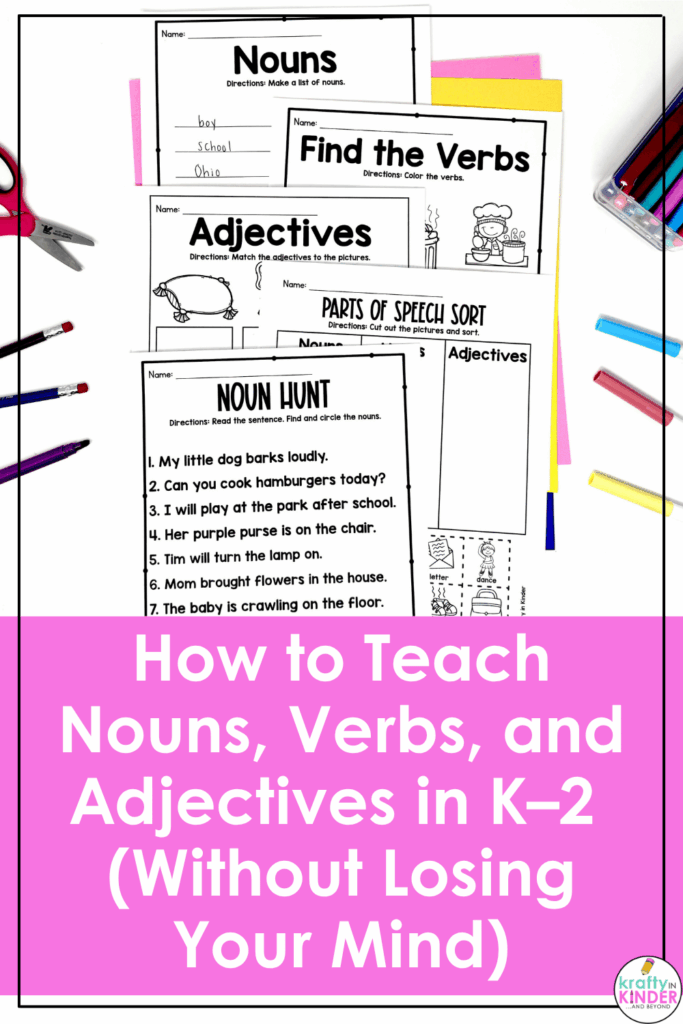
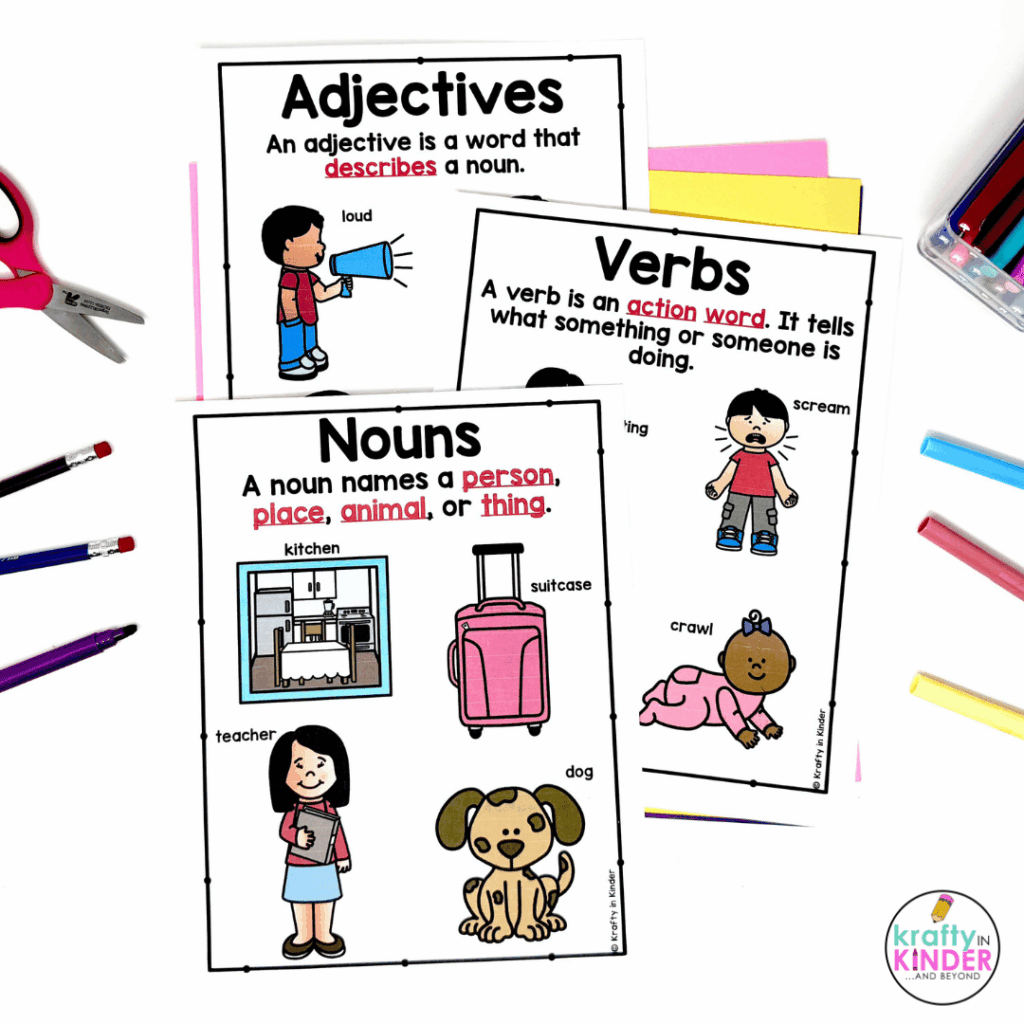
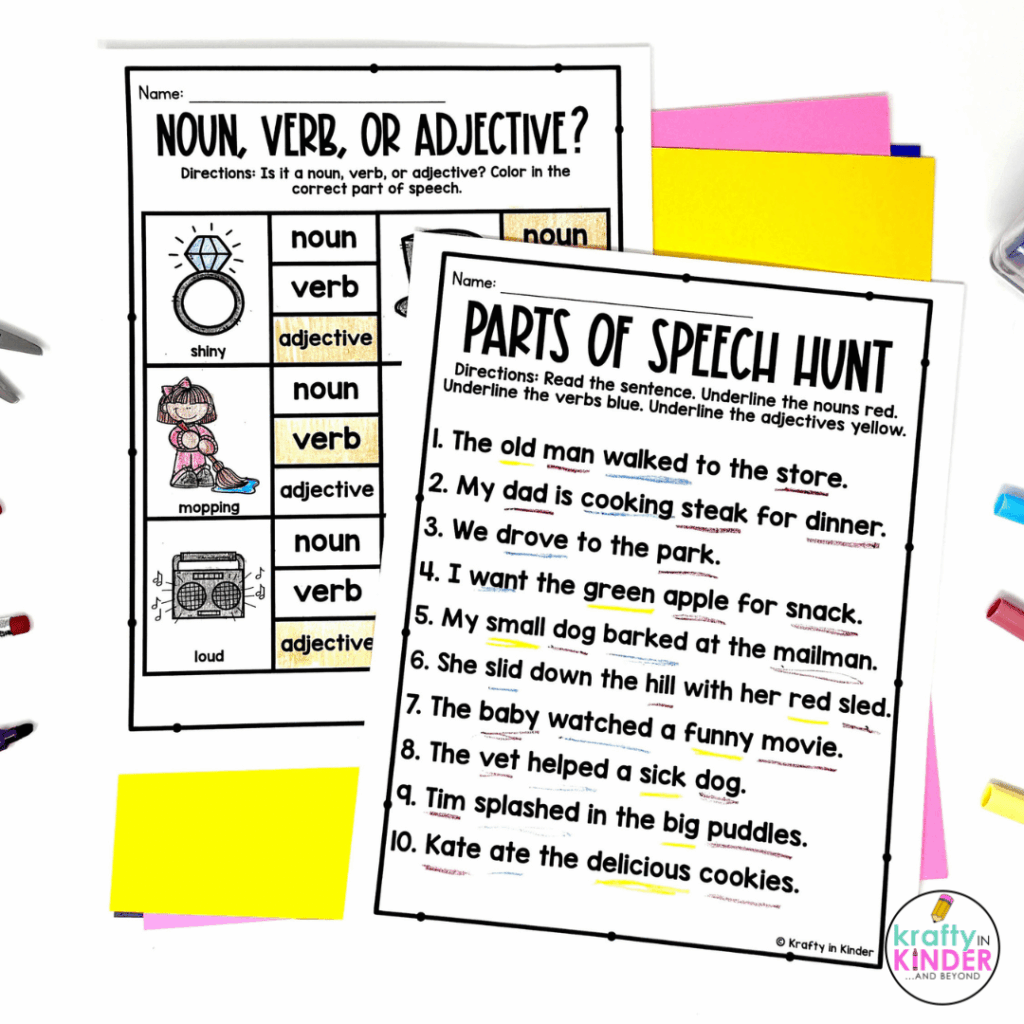
Once students have been introduced to each part of speech, it’s time to take the learning further with repeated practice in different formats. These Print & Go Grammar Worksheets allow you to do just that, without extra prep. I don’t know about you, but as a busy teacher, that is always music to my ears! This printable set includes:
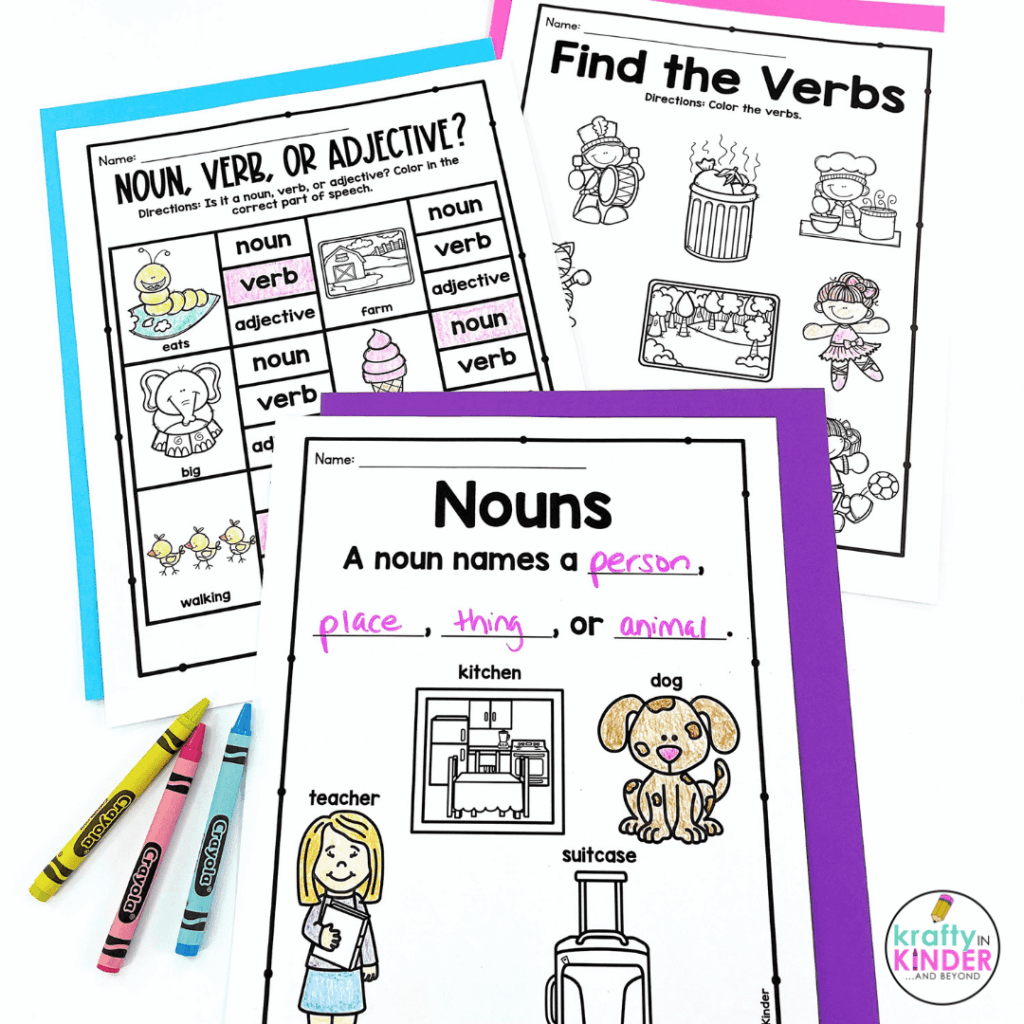
- Noun, verb, and adjective posters
- Picture hunts
- Picture and word sorts
- Brainstorming pages
- Simple sentence practice
- Independent worksheets
- A full answer key
Students can work with these during small group instruction, literacy centers, morning work, sub days, or as homework assignments. Because the activities across the pack follow familiar routines, students don’t need new directions every time. They build confidence while reinforcing the concepts again and again in meaningful ways.
More Ways to Use the Posters
I also love to have students add a mini version of the posters to their grammar notebooks. Just print these as 2-4 per page and have students cut them out and glue them down. They serve as a helpful reference while they work through the pages. Oh, and don’t forget to print, laminate, and hang the full-size versions to be used as an anchor chart in your literacy center, too!
Step Three: Keep Skills Fresh with Center Games
When it comes to primary learning, practice is essential! When students practice identifying nouns, verbs, and adjectives regularly, especially in short, focused bursts, they can truly master the skill and apply all that they’ve learned! My all-time favorite way to do this is with Boom Cards. They are the perfect tool to use during center time, require no prep, and are SO fun for primary learners! This Parts of Speech Boom Card set is what we use in my classroom, and it checks all the boxes for me! Here’s what’s included:
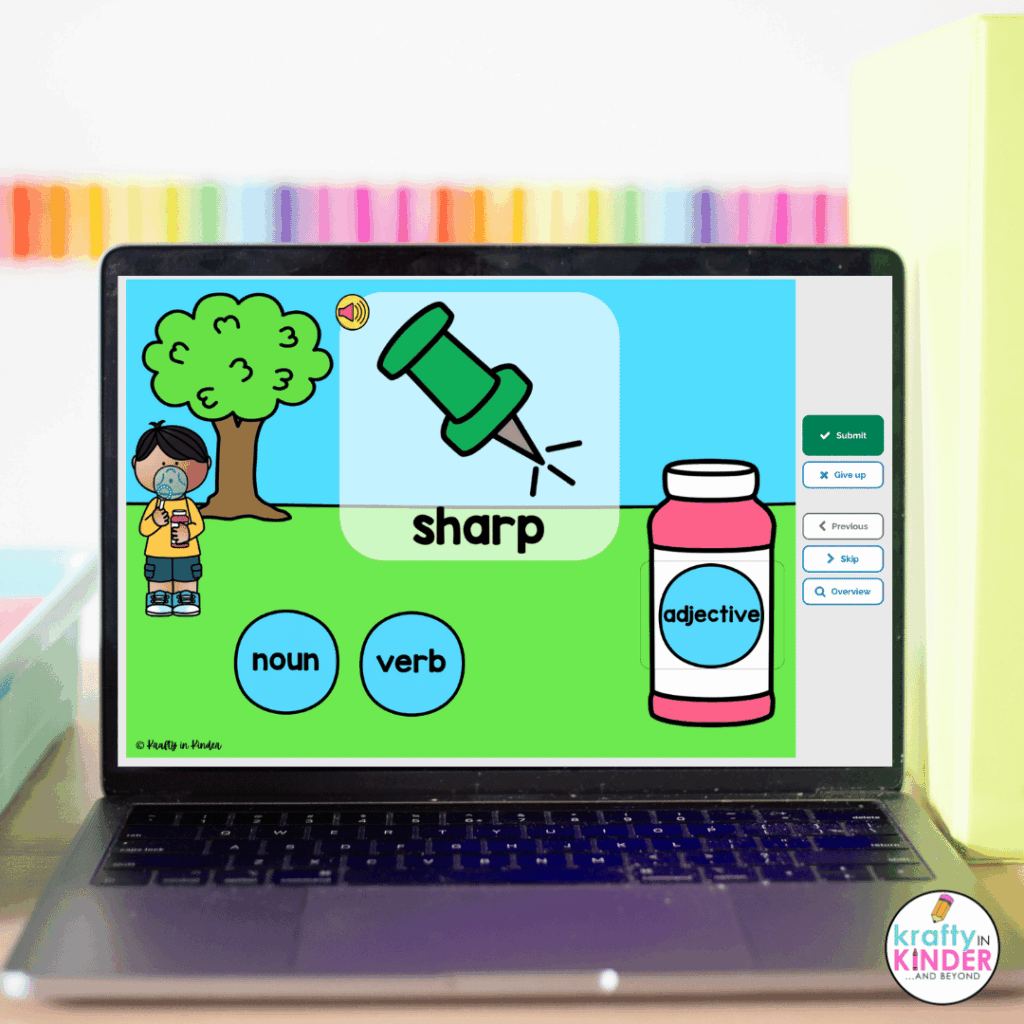
- Over 70 interactive task cards
- Audio support to help early readers
- Self-checking features
- Drag-and-drop sorting and sentence tasks
Boom cards are perfect for center time because students see immediate feedback, which means they are learning and correcting as they go. Plus, since they include audio instructions and easy-to-follow activities, you don’t need to monitor every step. I like to set students up as partners with a device to work together. They can take turns or work as a team to get plenty of practice in with nouns, verbs, and adjectives. Kids love these because they feel more like a game than traditional schoolwork.
How to Weave Nouns, Verbs, and Adjectives Activities into Your Week
Wondering how to pull this all together? Here’s a simple schedule you can use that utilizes all 3 components of this teaching system, but a few fun extras:
- Start Monday with a mini-lesson using the Google Slides resource as a whole group
- Use one worksheet each day as a warm-up or small group activity
- Assign Boom Cards once or twice per week for extra practice
- Encourage students to “hunt” for nouns, verbs, and adjectives during read-alouds
- Use silly sentence creation as a Friday celebration activity
Grammar sticks when it’s short, frequent, and fun! Using consistent routines like this will help you ensure your kids get what they need to be successful with nouns, verbs, and adjectives. And remember, these resources are low-prep, so it’s super simple to implement!
Teaching Nouns, Verbs & Adjectives Made Simple
Teaching nouns, verbs, and adjectives doesn’t have to feel overwhelming or repetitive. Start by introducing the concepts clearly through whole-group modeling, where students can see and hear examples in real sentences. Then, reinforce the learning in small groups with hands-on practice that allows students to sort, act out, and play with language. Finally, keep the skills fresh through center review and independent activities that spiral naturally throughout the year. When students learn in this layered way, they build real, lasting mastery!
Grab the Parts of Speech Bundle!
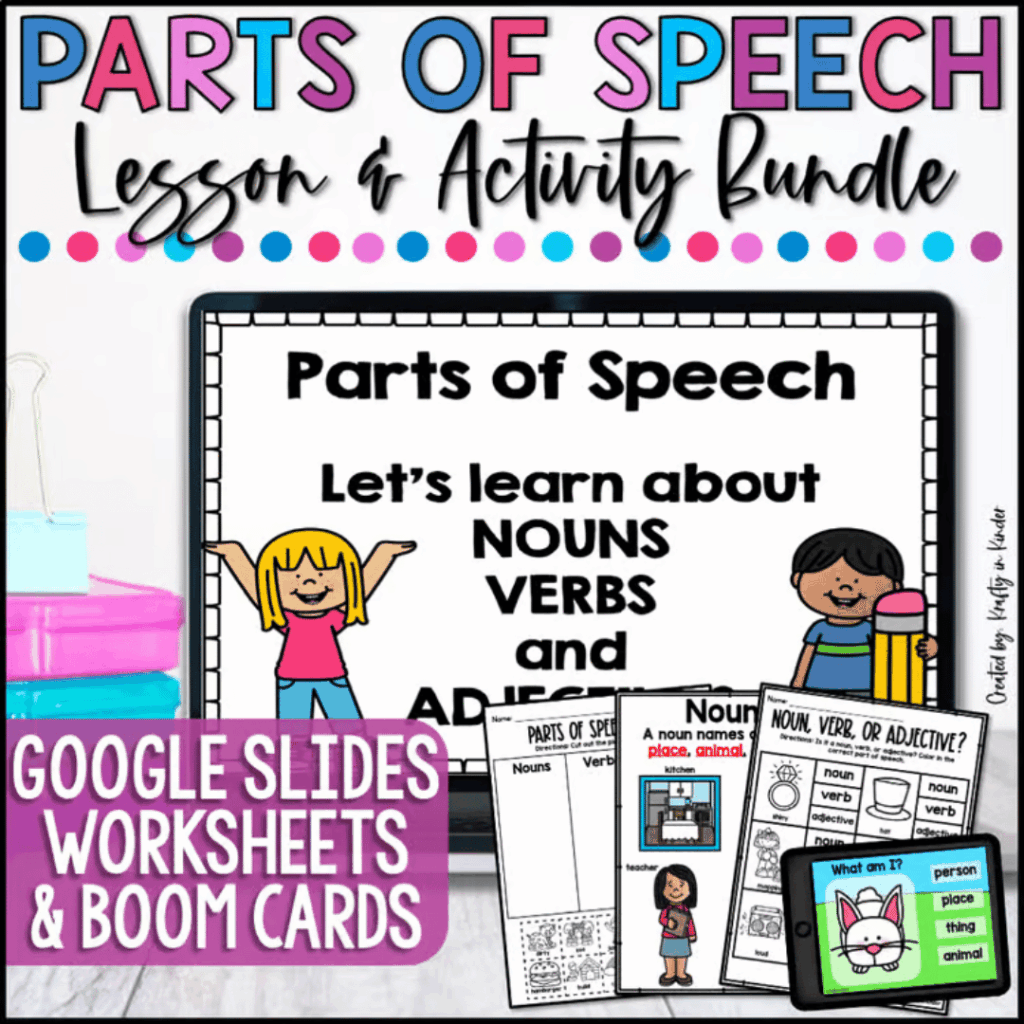
If you’d like everything bundled and ready to go, the full Parts of Speech Bundle streamlines planning and makes grammar instruction predictable, effective, and classroom-friendly. Inside, you get the Digital Lesson Slides, the Worksheets & Posters, as well as the Digital Boom Cards. Click here to grab the bundle now to save prep time and confidently teach grammar all year!
More Grammar Teaching Ideas
Looking for more ways to make teaching grammar fun and easy? Check out these posts next!
- Fun Grammar Activities for the 1st Grade Classroom
- How I Teach Parts of Speech in the Primary Classroom
Pin It!
Make sure to pin this post on Pinterest so that you can find it quickly and easily later!