The Phonics Routine That Actually Works (Plus a Free Sample to Try It!)
Have you ever felt like you’re constantly searching for new phonics activities, but your students still aren’t retaining the skills you’re teaching? The truth is, effective phonics instruction isn’t about finding more activities. It’s about creating a consistent phonics routine that gives students repeated opportunities to practice the same skill in different ways. When students know what to expect and get meaningful practice day after day, phonics lessons become more effective and a lot easier to plan.
Why Consistent Phonics Routines Matter
Think about any other part of your school day. Your morning routine probably follows a predictable pattern, and your math block likely has a structure. Your students know what happens when they enter the classroom, transition between subjects, and pack up at the end of the day. Phonics instruction benefits from that same consistency!
When students know the routine, they spend less time figuring out directions and more time practicing the target skill. The activities become familiar, which builds independence and confidence.
This is especially important for struggling readers. Predictable routines reduce cognitive load and allow students to focus on decoding rather than navigating new expectations every day.
The best part? Consistent routines save teachers time, too! Instead of reinventing your phonics block every week, you can use the same structure while simply changing the skill focus.
Let’s talk about how this looks, mistakes to avoid, and how to get started.
The Power of Using Different Activity Types
One mistake many of us make when teaching phonics is assuming students have mastered a skill because they completed one activity successfully. In reality, students need multiple opportunities to interact with the same phonics pattern in different ways.
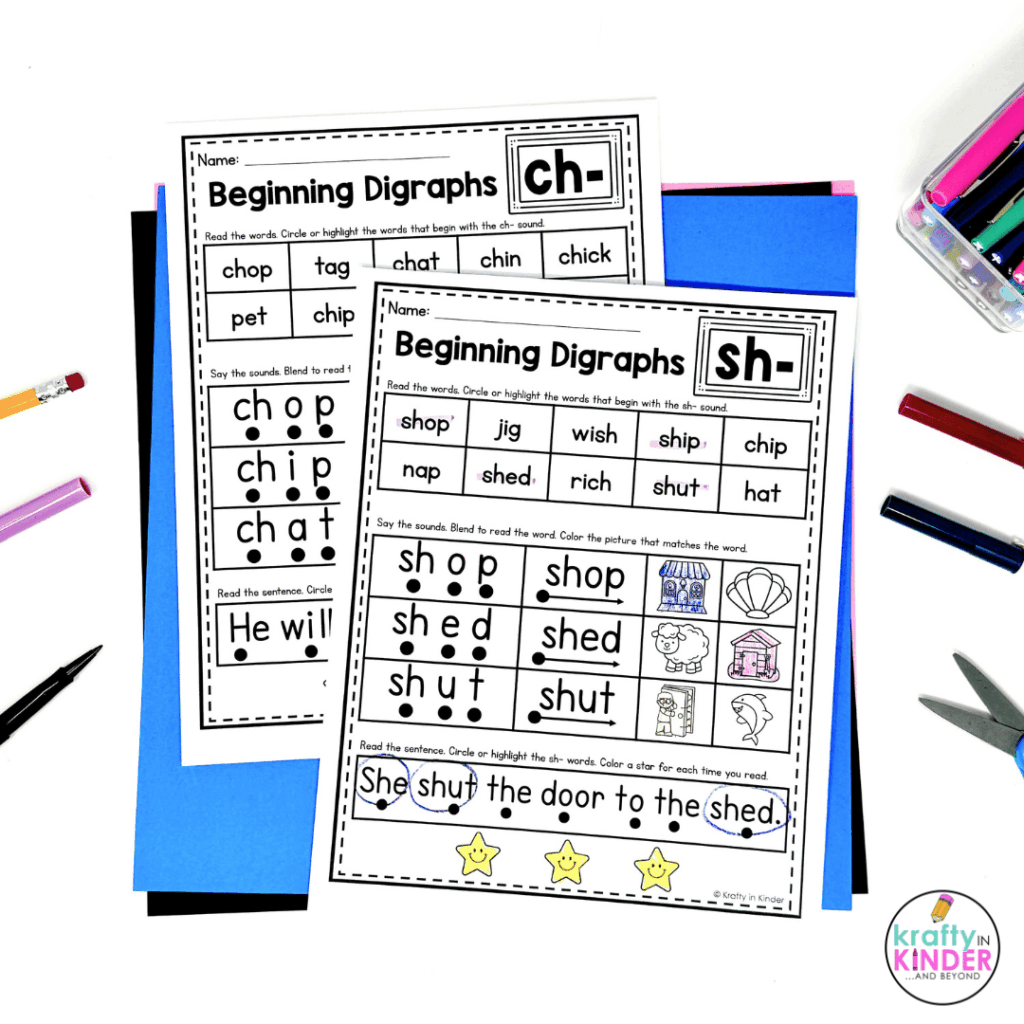
Some students learn best through hands-on activities. Others need repeated reading practice. Some benefit from writing words and noticing patterns themselves. A strong phonics routine includes a variety of experiences while staying focused on the same skill.
You could have students read decodable words, sort words by pattern, build or write words, complete independent practice, read connected text, and review through games or crafts. Each activity reinforces the same phonics concept from a slightly different angle. Over time, those repeated exposures add up to stronger retention and greater confidence.
Wondering how this could look in your classroom? Let’s take a peek at the routine that’s working wonders in my room right now!
What a Consistent Phonics Routine Could Look Like
One of my favorite things about this phonics routine is that it follows the same progression every time. Students know what to expect, which helps build confidence and independence. At the same time, they’re practicing the target skill in several different ways, leading to stronger retention and mastery.
Let’s use the SH digraph as an example.
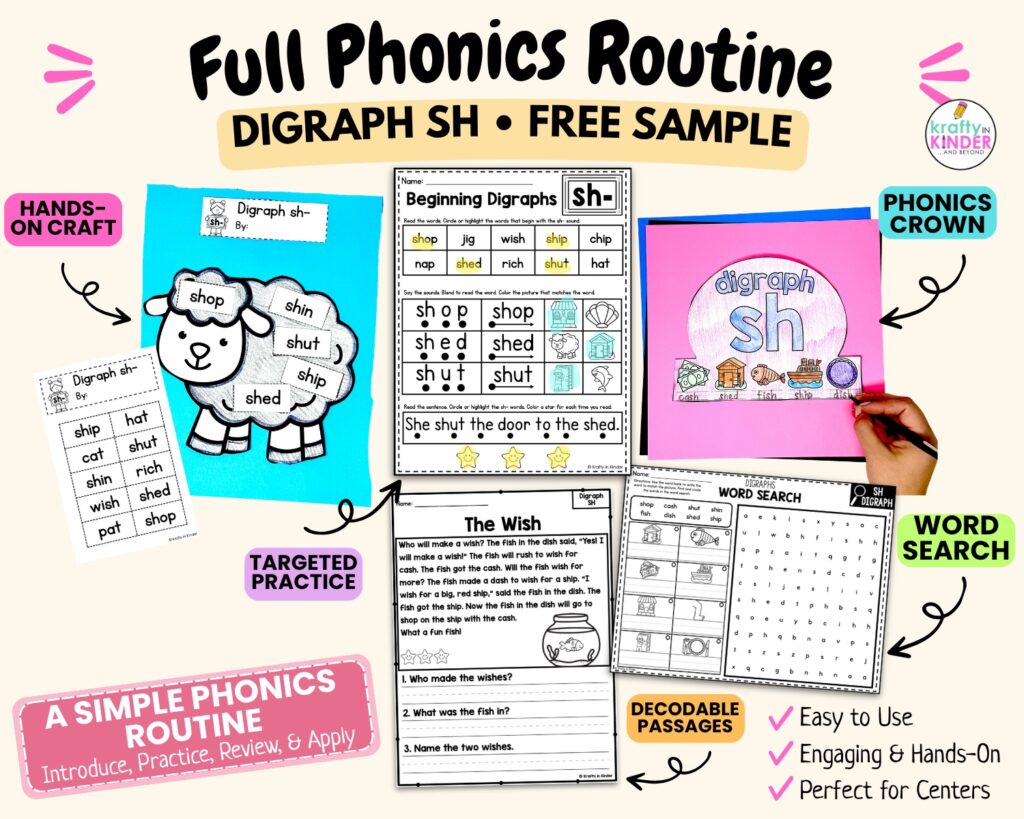
Introduce the Skill
Start by introducing the skill. Review the SH digraph together and discuss the sound it makes. Read a few SH words as a class and encourage students to listen for the sound at the beginning or end of each word. This quick introduction helps build a foundation before students begin working independently.
Hands-On Practice
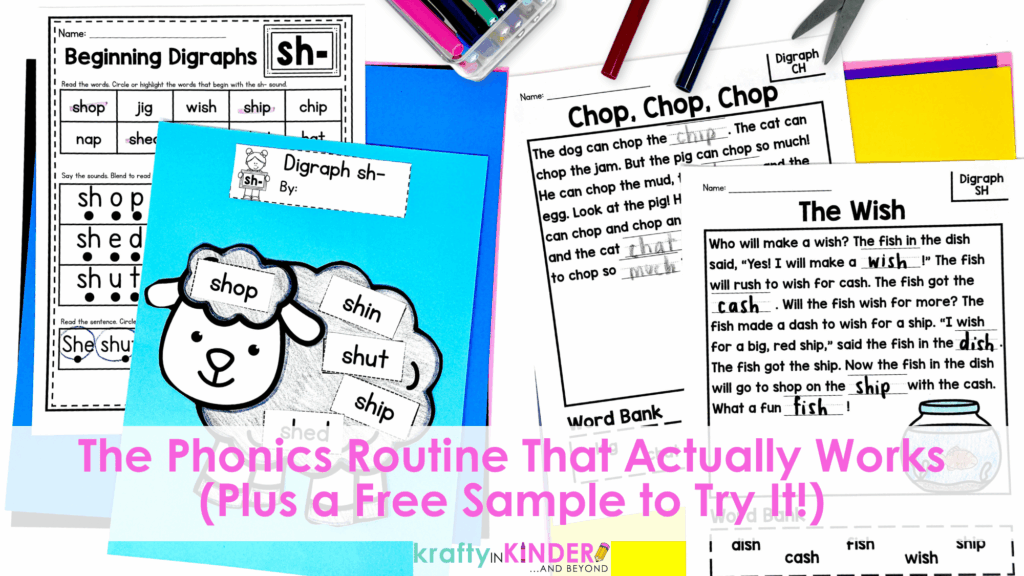
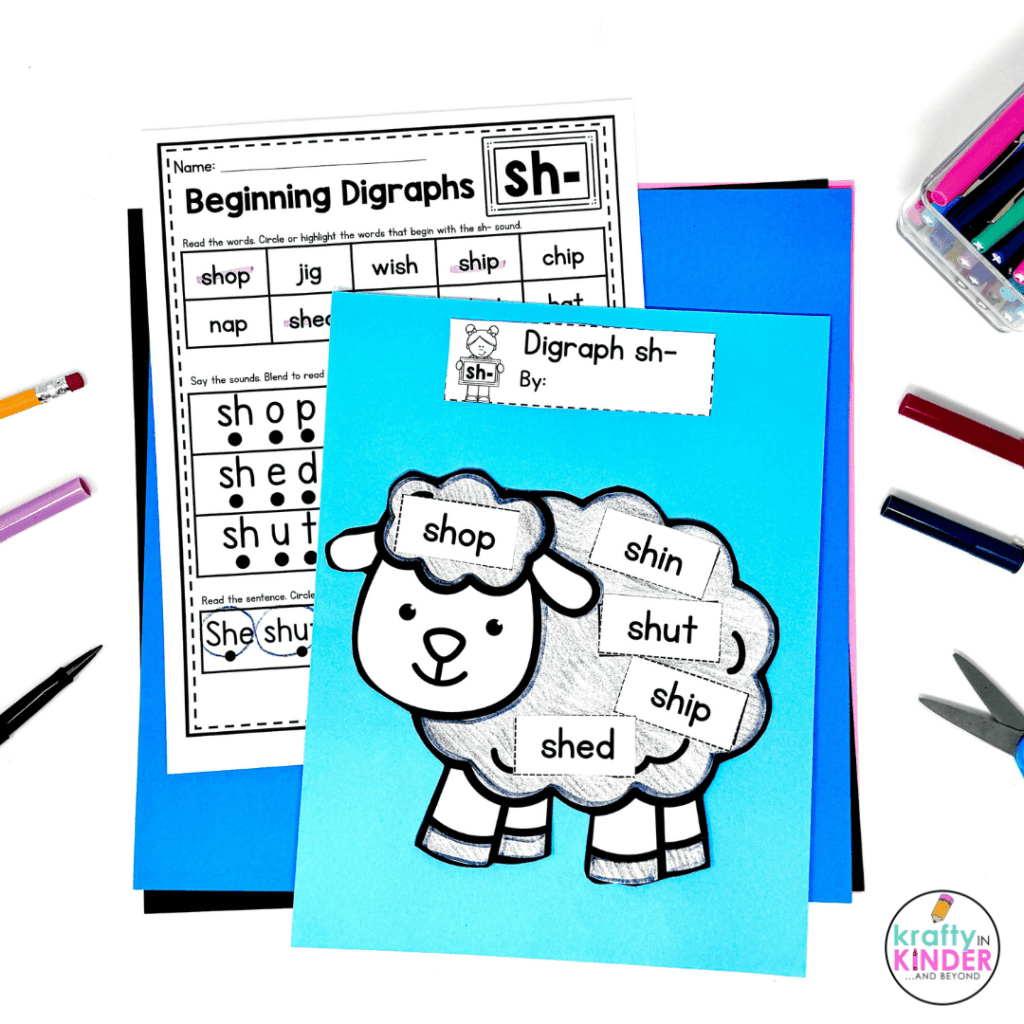
Next, move into hands-on practice with the SH craft activity. Students read, sort, cut, and glue decodable SH words onto the craft. This gives them an opportunity to actively interact with the target pattern while practicing word recognition and decoding skills.
Targeted Practice
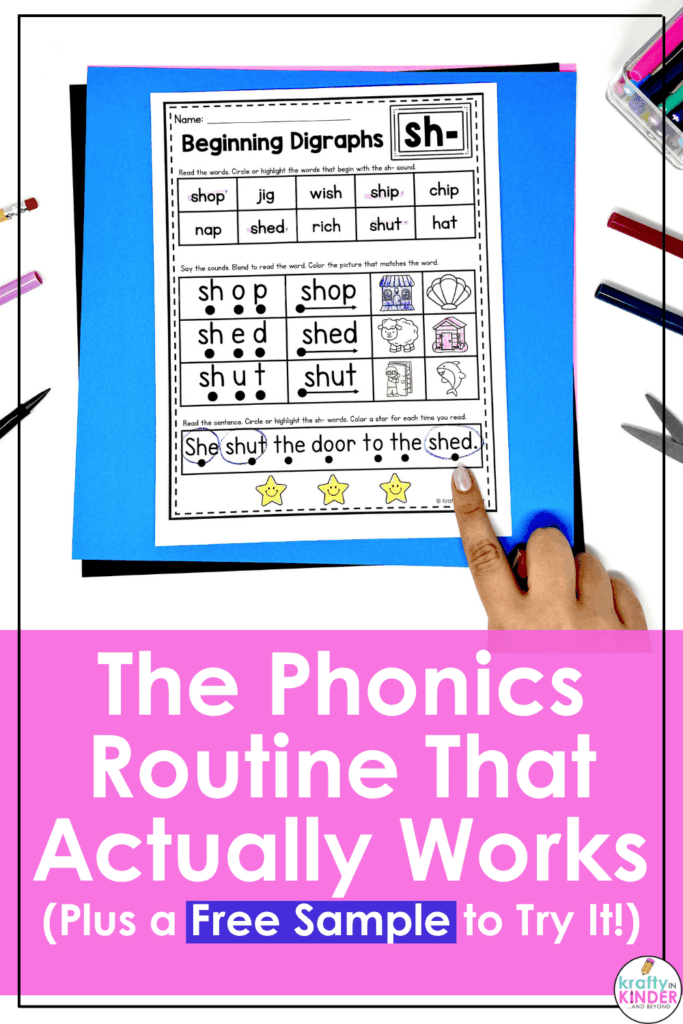
Once students have had that hands-on experience, reinforce the skill with the targeted worksheet. Students practice reading, blending, and identifying words with the SH digraph. This is a great opportunity to check for understanding and provide extra support where needed.
Extend Learning
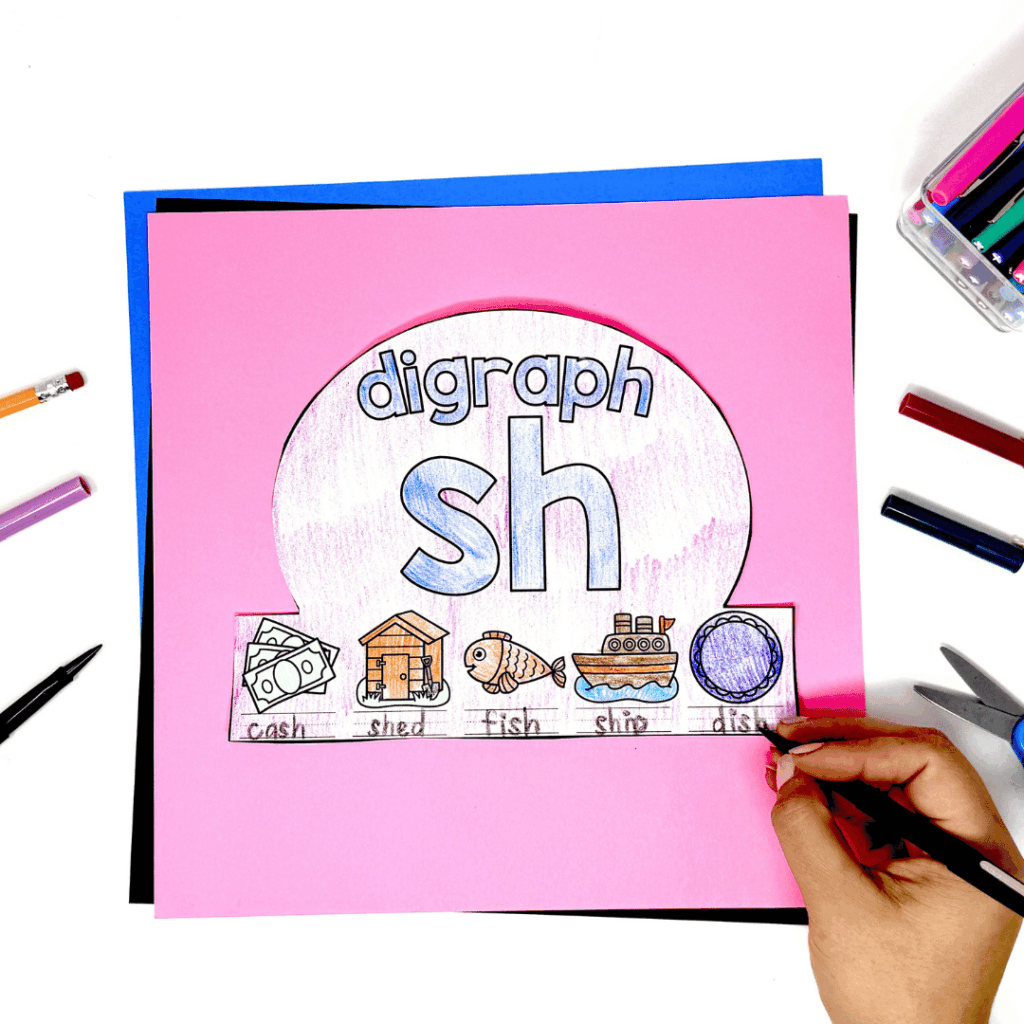
After that, extend the learning with the phonics crown. Students love wearing their finished crowns, but the real value comes from the reading and writing practice built into the activity. It feels fun while still providing meaningful skill reinforcement.
Additional Practice
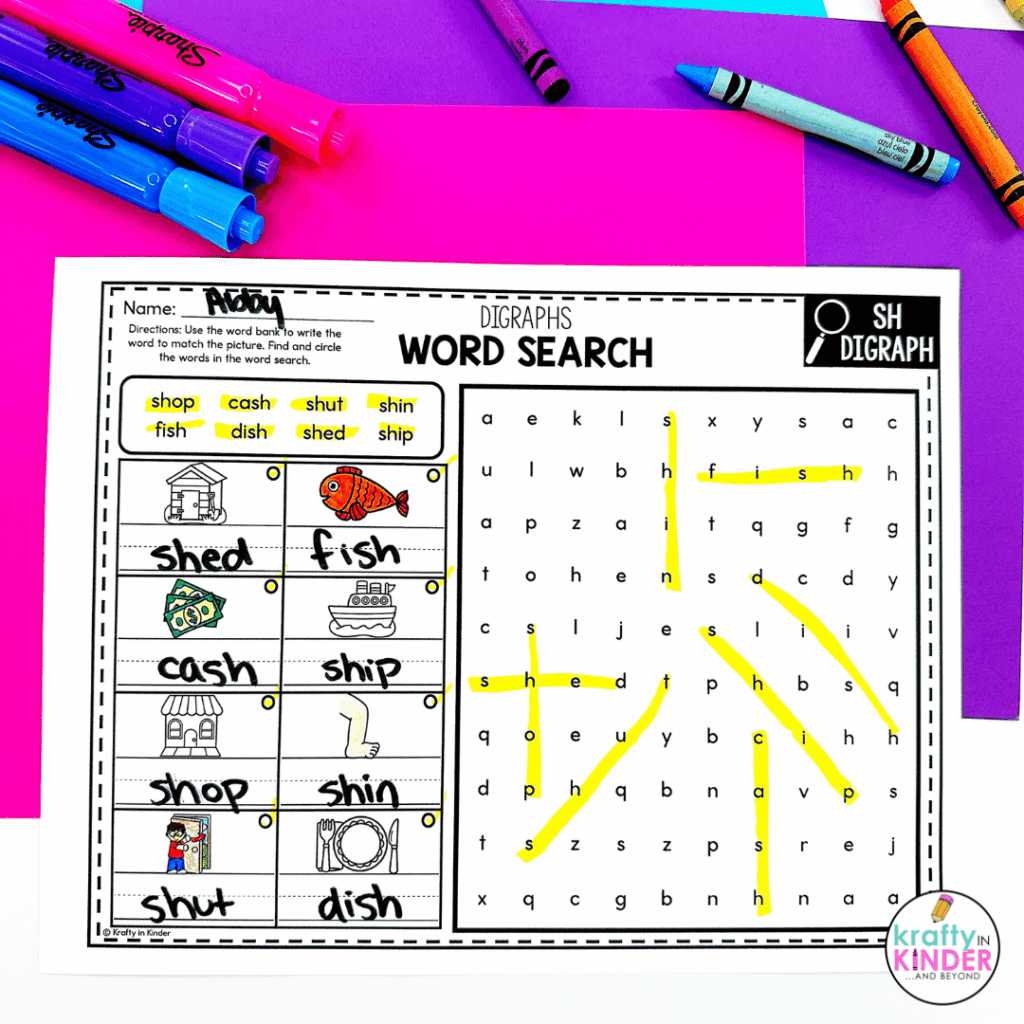
For additional review, students can complete the SH word search. This simple activity gives them another chance to recognize and read decodable words containing the target skill. It works well during centers, morning work, or as an early finisher option.
Apply The Skill
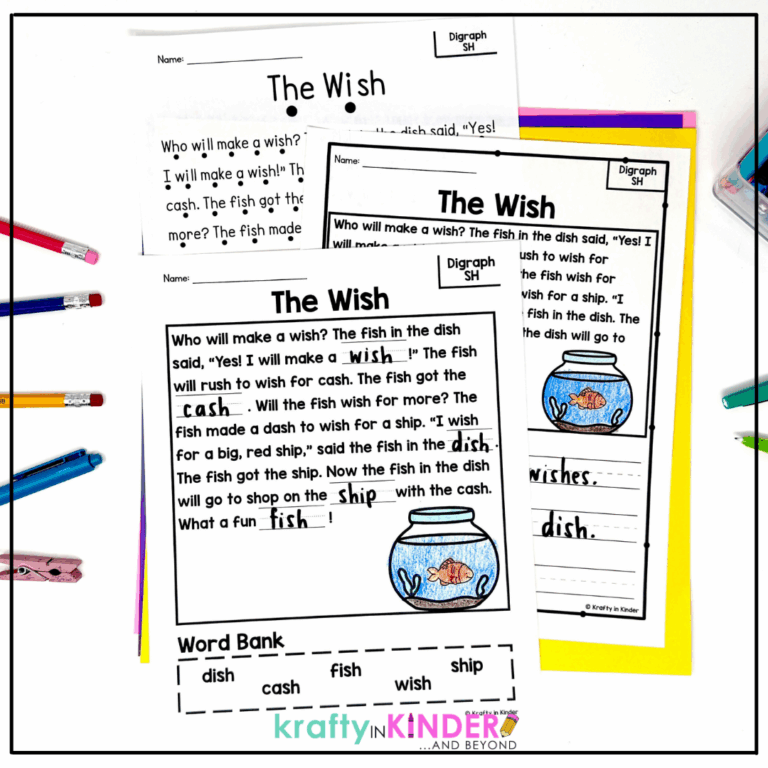
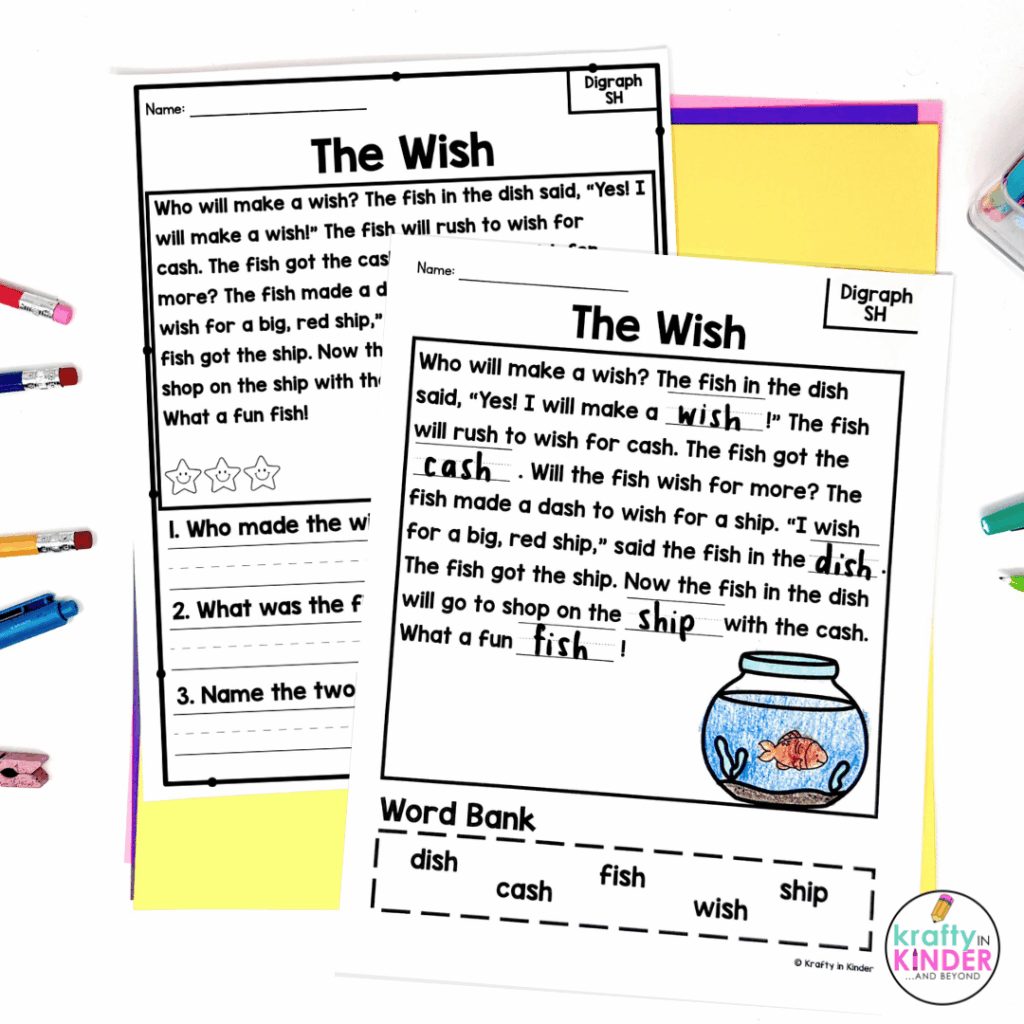
Finally, bring everything together with the decodable reading passage. Students apply what they’ve learned by reading connected text filled with SH words and then answering comprehension questions. This step is important because it helps students move beyond isolated word practice and apply the skill in authentic reading.
Why This Phonics Routine Works
The beauty of this routine is that every activity focuses on the same phonics skill while approaching it from a different angle. Students are reading, writing, sorting, decoding, and applying the pattern repeatedly. That repetition is exactly what helps phonics skills stick.
You can use this routine all in one lesson, spread it across several days, or incorporate the activities into your literacy centers throughout the week. The structure stays the same, making it easy for students to follow and easy for teachers to implement.
A Free Way to Try This Phonics Routine
If you’d like to see what this type of phonics routine looks like in action, I’ve put together a free SH Digraph Sample that gives you a chance to try several activities together. Inside the free sample, you’ll find a complete phonics routine that includes:
- A hands-on craft where students cut, sort, and glue SH words
- A targeted worksheet for reading, blending, and identifying words
- A phonics crown for reading and writing practice
- A word search featuring decodable SH words
- A decodable reading passage with comprehension practice
What I love about this sample is that it shows how different activity types can work together to reinforce one phonics skill.
For example, students might begin by sorting and reading SH words in the craft activity. Later in the week, they can revisit those same words while completing the phonics crown or word search. By the time they read the decodable passage, they’ll have seen and practiced the pattern multiple times.
Rather than jumping from one unrelated activity to another, students get repeated practice with the same skill in meaningful ways. I mean, what could be better than that?!
It’s also a great way for teachers to see how a predictable phonics routine can work without spending hours planning or gathering materials from multiple places. Enter your information below to grab your copy of this phonics routine and get started right away!
Start Small and Build Up with Your Phonics Routine
If you’re trying to strengthen your phonics instruction, you don’t need a complicated system.
Start with one skill, and use a consistent structure. Next, give students multiple opportunities to practice. Then watch what happens when familiarity and repetition start working in your favor.
The truth is that students don’t need a brand-new phonics activity every day. They need meaningful opportunities to revisit skills, apply what they’ve learned, and build confidence through repeated practice. A simple phonics routine can help make that happen while saving you valuable planning time.
If you’d like to test-drive this approach before investing in additional resources, grab the free SH Digraph Sample. You’ll get a complete phonics routine you can use right away while seeing how predictable, skill-focused practice can support stronger decoding and retention.
Download your free sample today and see how easy it can be to build a phonics routine that works for both you and your students!
Want to Learn More About the Resources in this Phonics Routine Sample?
Click the links below to explore the full line for each piece of this simple phonics routine!
- Phonics Crafts & Practice Worksheets
- Phonics Crowns
- Phonics Word Searches
- Decodable Reading Passages
Save This Post
Make sure to pin this post on Pinterest so that you can find it when you’re ready to craft your own phonics routine!