Fiction vs. Nonfiction: How to Teach This Foundational Reading Skill in K-2
If you’ve ever introduced fiction vs. nonfiction to a room full of primary learners, you know it can get a little confusing at first. Students might think every book with pictures is fiction, or assume that any book about animals must be nonfiction. That’s completely normal, teacher-friend! The key is introducing fiction vs. nonfiction for kids in a way that feels concrete, interactive, and easy to practice. When students see clear examples and have chances to sort, discuss, and create, the concept starts to click. Let’s make this concept simple and fun!
The Importance of Fiction vs. Nonfiction for Reading Comprehension
One of the most exciting moments in early reading instruction is when students begin to realize that not all books are the same. Some stories come from an author’s imagination, while others teach us real facts about the world. Helping students understand the difference between fiction vs. nonfiction is an important step in building strong reading comprehension.
But. . . if you’ve ever tried to teach this concept, you know it’s not always easy! Not to worry, friend, we’re simplifying it today. Let’s walk through a few ways to introduce fiction and nonfiction in your primary classroom, as well as a low-prep resource that will help make this easier than ever!
Start with a Simple Whole-Group Conversation
How you begin makes a huge difference in how this goes! Before opening any books, it helps to start with something students already understand. . . real life versus make-believe.
You might begin by asking questions like:
- Can animals really talk like people?
- Could a dragon live in our town?
- Can we learn real facts about sharks?
Students love answering these kinds of questions, and the conversation naturally leads to the idea that some stories are pretend while others teach us true information. This quick discussion only takes about five minutes, but it gives students a mental framework before you start looking at books.
Anchor Charts for Fiction vs. Nonfiction
Once students understand the idea of real versus pretend, it’s time to introduce the vocabulary. An anchor chart is a great way to make the terms visible and easy to reference throughout the week.
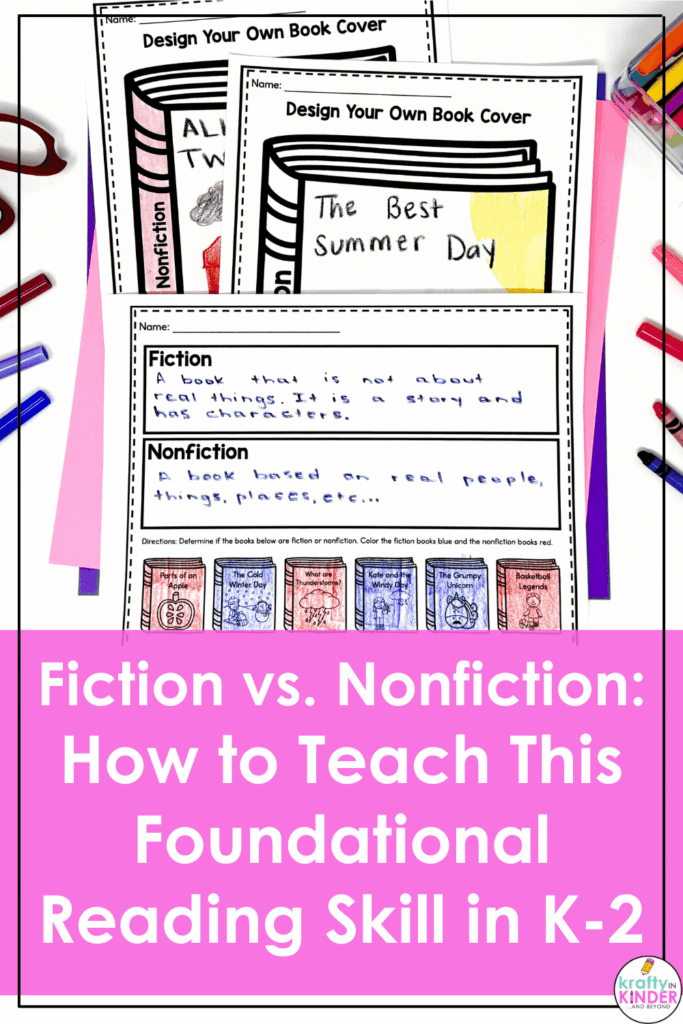
Create two columns on chart paper labeled Fiction and Nonfiction. As a class, talk about the characteristics of each type of text.
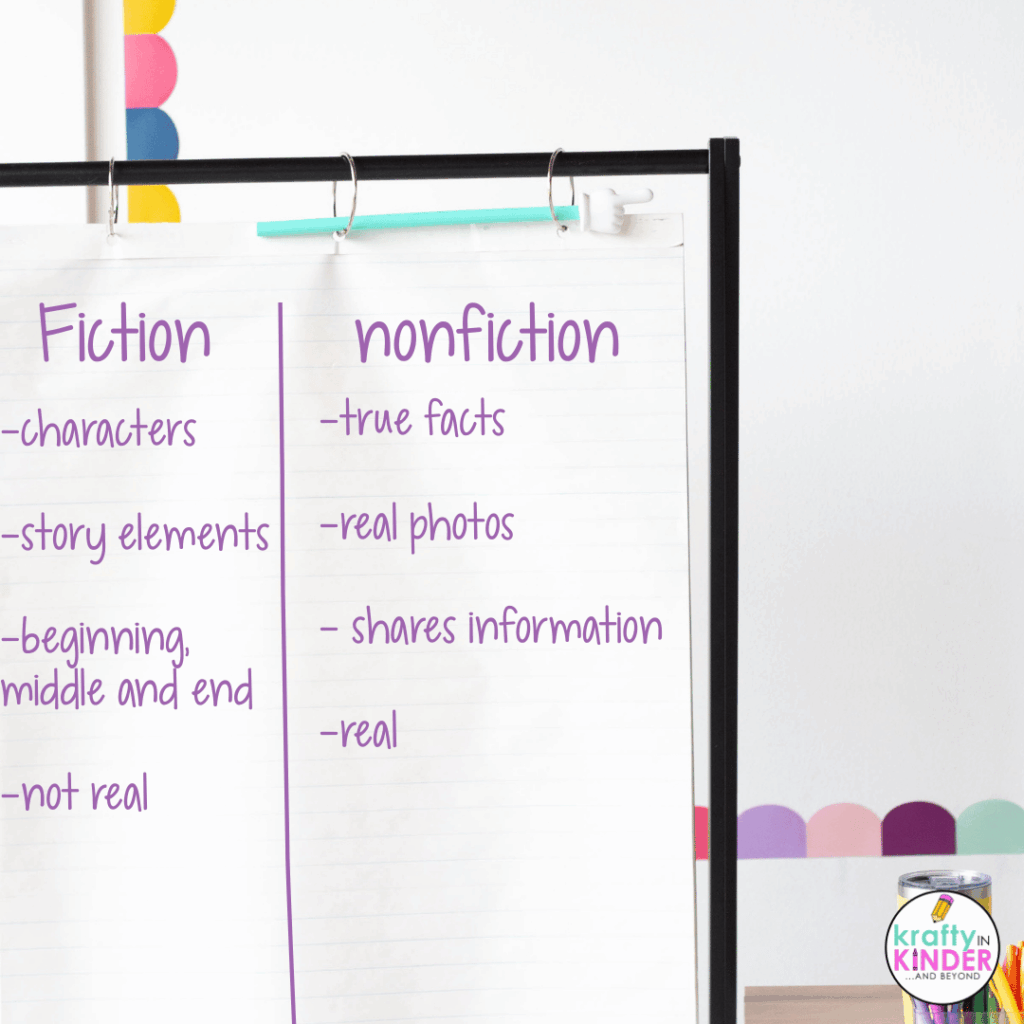
For fiction, students will usually notice things like characters, story events, and imaginative elements. For nonfiction, they often recognize facts, real photographs, and information about animals, places, or people.
If you’re modeling this discussion, you might say something like, “When I read a fiction book, I’m reading a story that someone made up. The characters and events come from the author’s imagination. But when I read a nonfiction book, I’m learning real information about something in our world.”
As students share their ideas, write them under the correct column. You can even add pictures if you’d like. Keeping this chart posted in your classroom helps students refer back to it whenever they encounter new books.
Pair Fiction and Nonfiction Read-Alouds
One of the most powerful ways to teach fiction vs. nonfiction for kids is by showing them examples side by side. Luckily, this is simple and easy to do with things you already have in your classroom, too!
Choose two books on the same topic. For example, you might read a fictional story about a bear and then share a nonfiction book that teaches real facts about bears. After the read-alouds, guide students through a short discussion. Ask questions like:
- Which book told a story?
- Which book taught us facts?
- How could you tell the difference?
This comparison helps students see the concept in action rather than just hearing a definition. A read-aloud and discussion like this usually takes about 15 to 20 minutes and works beautifully during your reading block!
Let Students Practice Sorting Fiction vs. Nonfiction
Once students have seen a few examples of fiction vs. nonfiction, they need a chance to practice identifying the difference on their own. Sorting activities are one of the easiest and most effective ways to reinforce this skill.
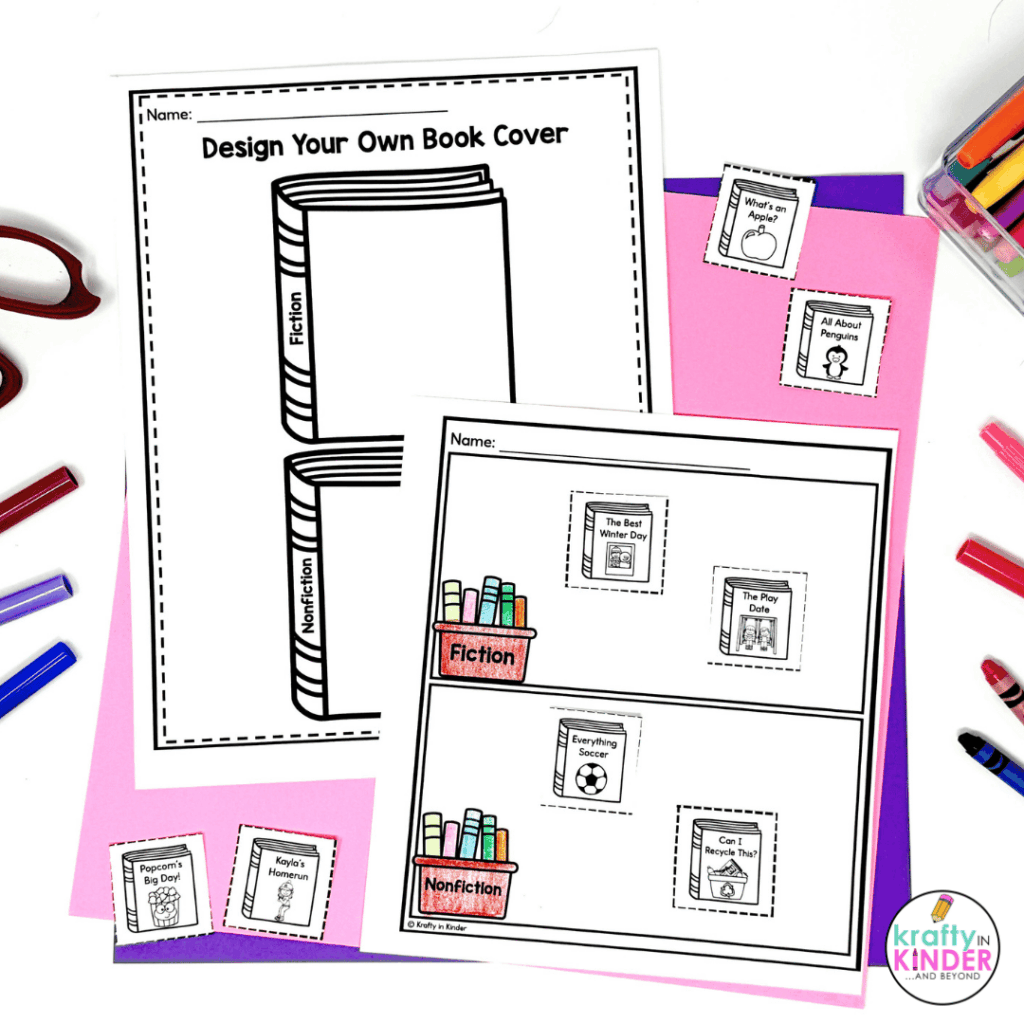
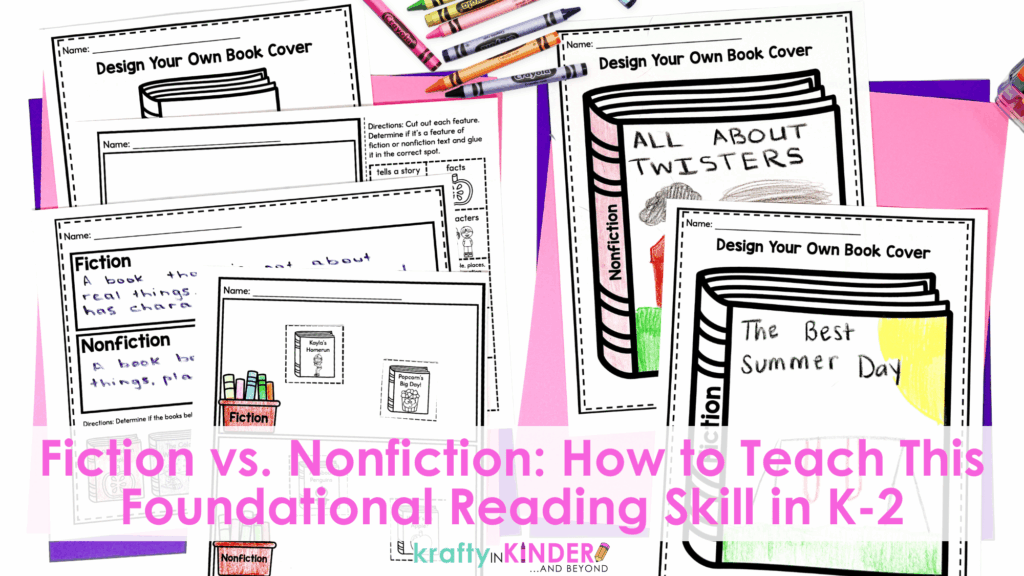
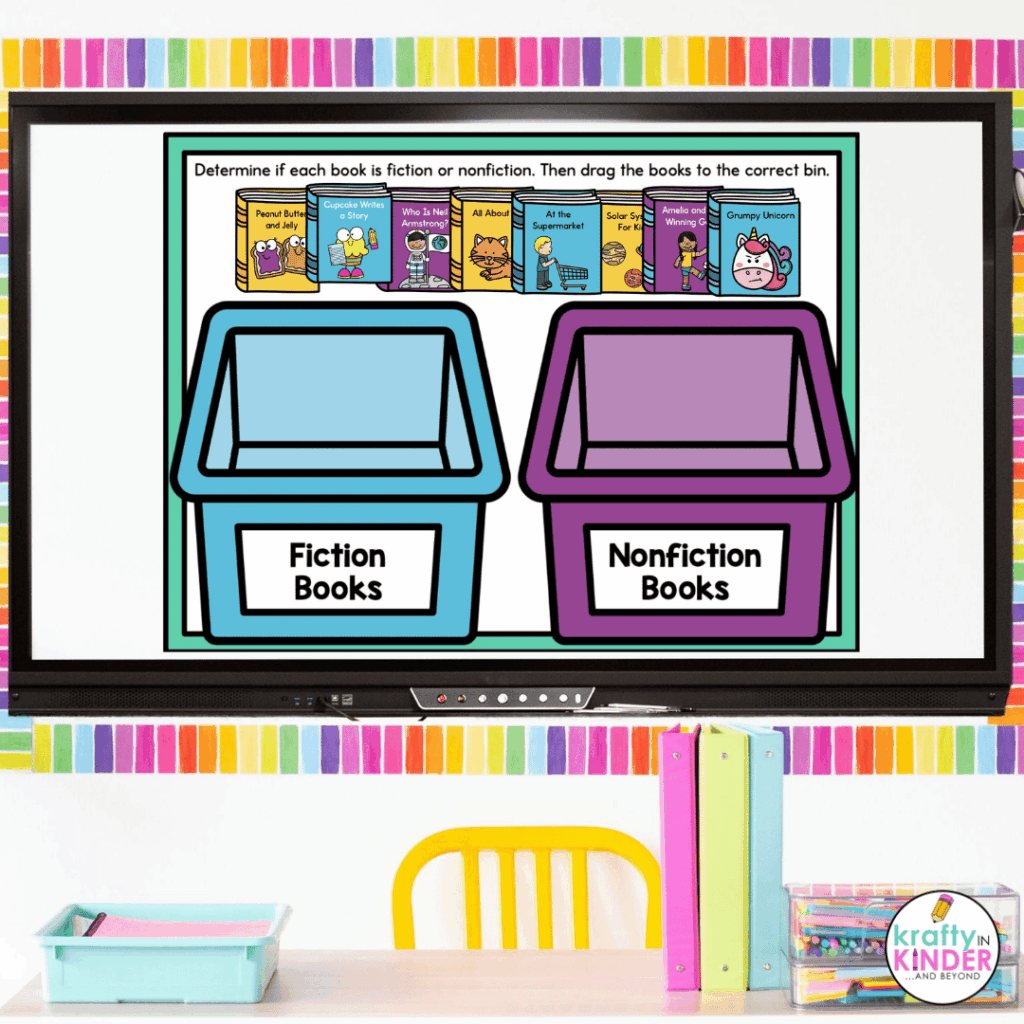
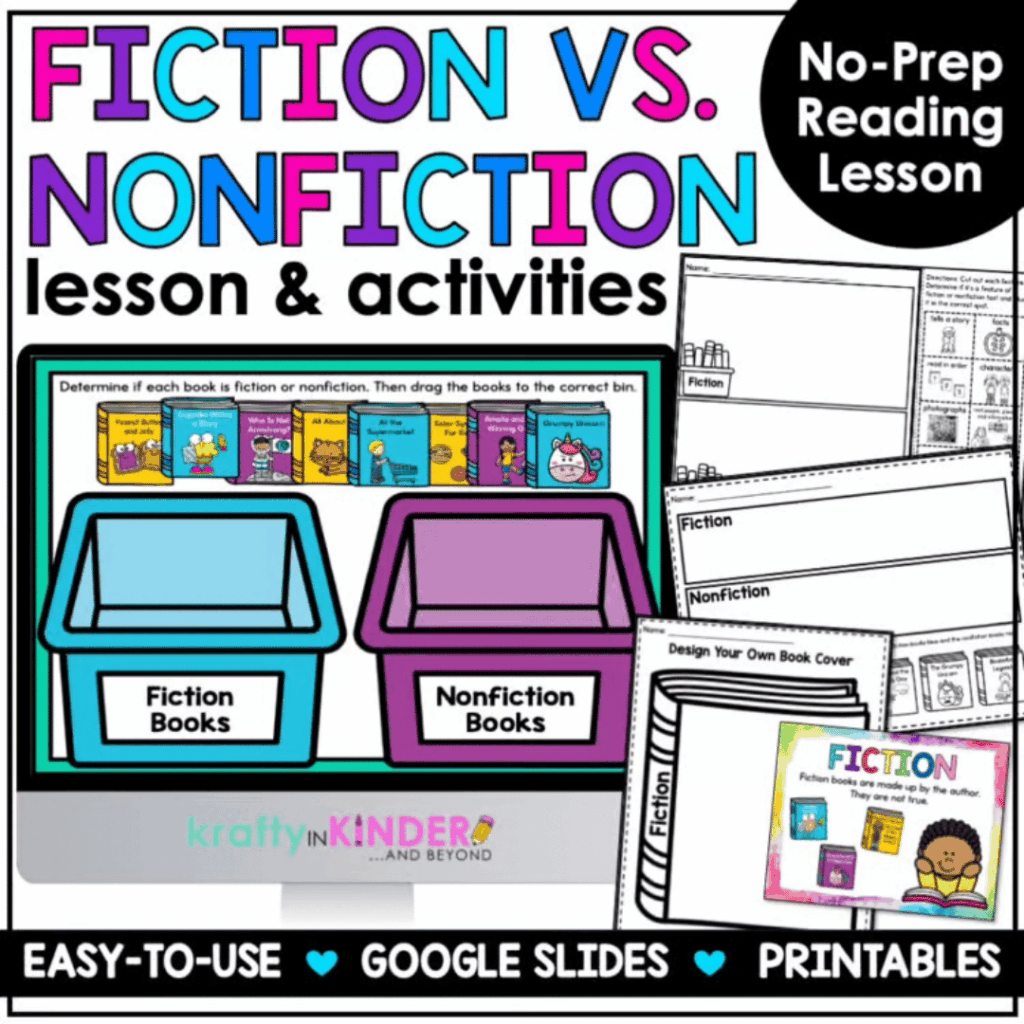
Inside my Fiction vs. Nonfiction Unit, students get to practice with both digital and printable sorts designed specifically for primary learners. During whole-group instruction, you can project the interactive digital sort and invite students to help decide where each book belongs.
For example, you might drag a book image to the middle of the screen and ask, “Let’s think about this one together. Do we think this book tells a made-up story, or does it teach us real facts?” Students can turn and talk before you move the book into the correct category.
For independent practice, the resource also includes printable sorting activities. Students look at book examples and text features, then sort them into the correct category by cutting and pasting. These work well during literacy centers, small group time, or as a quick follow-up activity after your mini lesson. Most students can complete the activity in about 10-15 minutes. This gives you a clear picture of who understands the difference between the two genres.
Sorting activities like these help students move from simply hearing the definitions to actually recognizing the characteristics of each type of text. That’s where the magic really happens!
Encourage Creativity with Book Cover Designs
I know you’ll love this one! After students have practiced identifying fiction and nonfiction books, it’s fun to let them apply their understanding in a creative way.
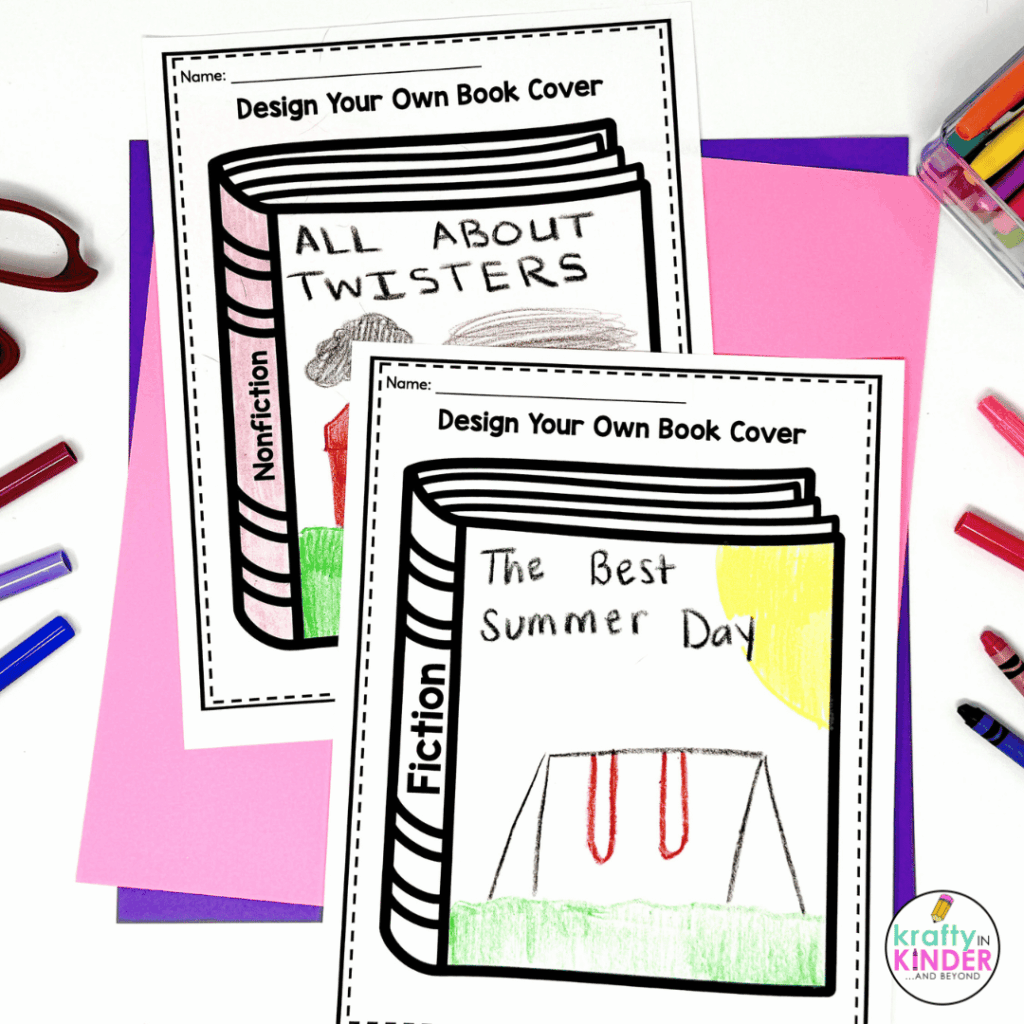
In my Fiction vs. Nonfiction Unit, I have a Creative Book Covers Activity that invites students to design their own book. Students decide whether they want to create a fiction or nonfiction book cover and then illustrate it to match the genre.
As students work, you might prompt them with questions like, “If your book is nonfiction, what real information will it teach?” or “If your book is fiction, who are the characters in your story?” Encourage them to include as many details as possible in their drawings.
A student creating a nonfiction book might draw animals, space, or weather topics, while a fiction cover might include imaginative characters or a story setting.
This activity works well as a writing center, an extension activity, or even a quick formative assessment. It usually takes about 15-20 minutes and gives students a chance to apply their understanding while still keeping the lesson engaging and fun.
Make Teaching Fiction vs. Nonfiction Easy
If you want to teach fiction vs. nonfiction to kids without spending hours planning activities, this ready-to-use unit brings everything together in one place.
The Fiction vs. Nonfiction Unit was designed to help primary teachers introduce this foundational reading skill in a clear, interactive way. You can start with whole-group instruction, move into guided practice, and then give students hands-on activities to reinforce their understanding.
Inside the resource, you’ll find:
- A ready-to-teach Google Slides lesson for whole-group instruction
- An interactive digital fiction and nonfiction sort
- Printable sorting activities for independent practice
- A creative book cover activity for applying the concept
- Classroom posters with simple definitions to display all year
Everything is designed for kindergarten and first-grade learners with age-appropriate visuals and clear explanations.
Grab the Fiction vs. Nonfiction Unit Today!
If you’re ready to simplify your planning and teach this important reading skill with confidence, this is the resource you need! It gives you a complete, ready-to-use lesson with engaging activities so you can spend less time planning and more time helping your students understand the difference between fiction and nonfiction books.
Grab the Fiction vs. Nonfiction Unit today to eliminate planning and make teaching this essential reading skill fun and easy!
Looking for More?
Read these posts next for more teaching tips for the primary classroom!
- How to Use Cloze Reading Activities to Improve Reading Comprehension
- How To Use Decodable Reading Passages
- How to Use Decodable Reading Passages in First Grade
Save These Ideas!
Make sure to pin this post on Pinterest so that you can quickly and easily find it later!