From Sound to Sentence: Decodable Digraph Practice
If you’ve been following along in my digraph series, then you’ve already laid a strong foundation by introducing digraphs through whole-group instruction and reinforcing them with hands-on centers and engaging practice activities. Today, we’re moving to the next big step. . . bridging the gap between phonics and fluency. Ahhh, I know! It’s a big one! But don’t worry, friends, I’ve got you. Let’s talk about decodable digraph practice and how it will bring this phonics series all together!

Why Decodable Digraph Practice Texts Are Essential
Ready for a phonics truth bomb? Just knowing the sound a digraph makes isn’t enough. Real reading magic happens when students apply that knowledge in connected text. When we move from isolated word practice to sentences and short passages, we’re helping students become confident, fluent readers. And that’s the goal, right?!
This is where decodable digraph practice comes in. We want to provide students with opportunities to practice working with those tricky digraphs in a way that they can be successful with. Students may master them in isolation, such as when reading words like sh-ip or ch-ick on a flashcard. But. . . they often fall short when they encounter those same words in context. That’s why decodable digraph practice texts are so powerful. They give students just the right amount of support and challenge as they connect phonics to real reading. This is where you’ll see reading magic happen!
Characteristics of Strong Decodable Digraph Practice Materials
So, what should we be aiming for here, you ask? Here’s what I look for when it comes to finding effective decodable digraph practice materials:
- Controlled phonics patterns
- High-frequency word integration
- Clear, short sentences or passages
- Visuals that support comprehension
- Opportunities to re-read for fluency
These are essential elements for great practice materials because they will help your kids achieve the quick wins they need to build confidence. There’s nothing worse than clumsily stumbling through a reading passage when you’re in the primary years. It feels SO frustrating! That’s not what we’re going for here, friends. Let’s build confidence and fluency hand in hand for better results!
Not sure where to find something like this? Luckily, I’ve got a couple of favorites that check all those boxes and are perfect for digraph instruction!
Decodable Reading Passages for Digraphs
Decodable Digraph Practice Texts are one of my go-to tools that we use all the time in my room. We use them in whole groups, small groups, and even for independent practice. These passages are short, engaging, and target specific digraphs like SH, CH, TH, and CK. Each passage focuses on one digraph at a time, so students can build confidence before moving on. This is also extremely helpful if your kids are working at different levels. You won’t introduce a new one until they’re 100% ready!
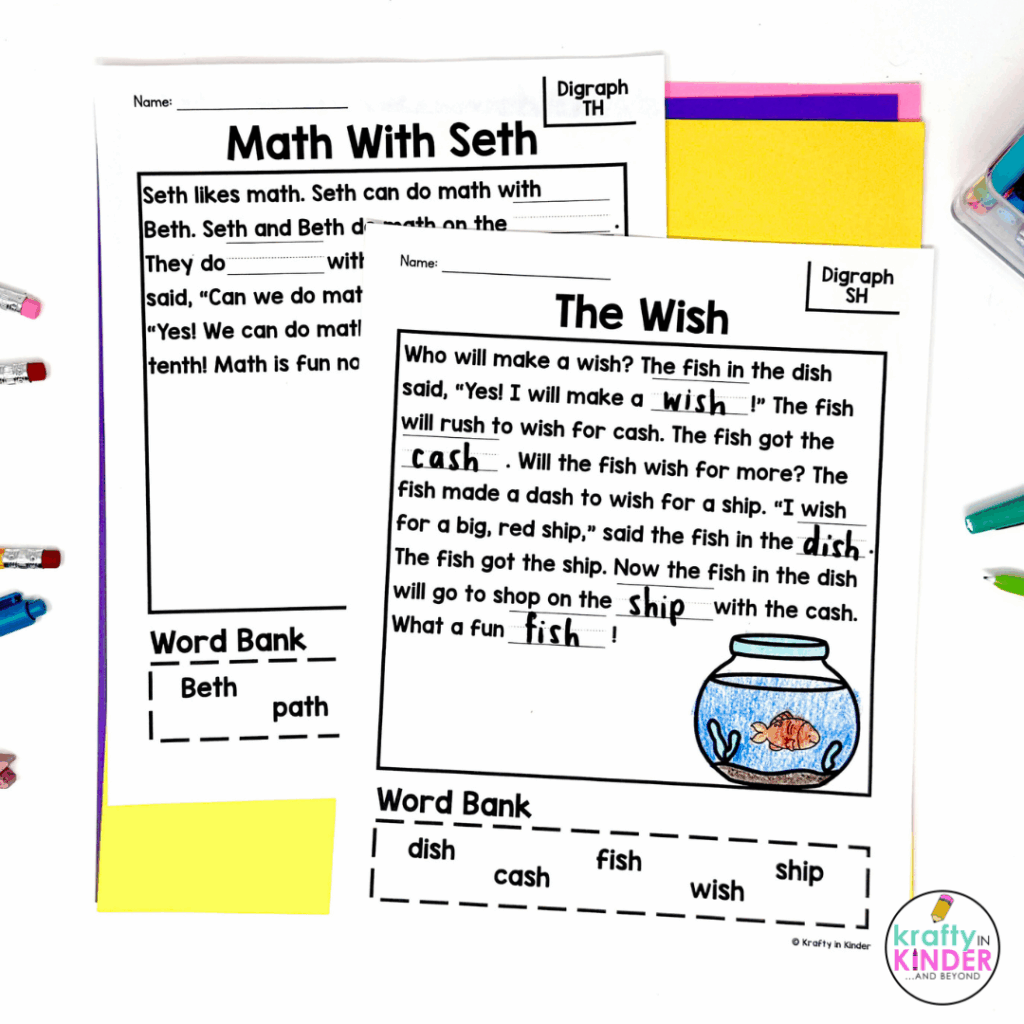
This resource includes 7 decodable passages focused on the following digraphs:
- SH
- TH
- CH
- WH
- CK
- Mixed Digraphs 1
- Mixed Digraphs 2
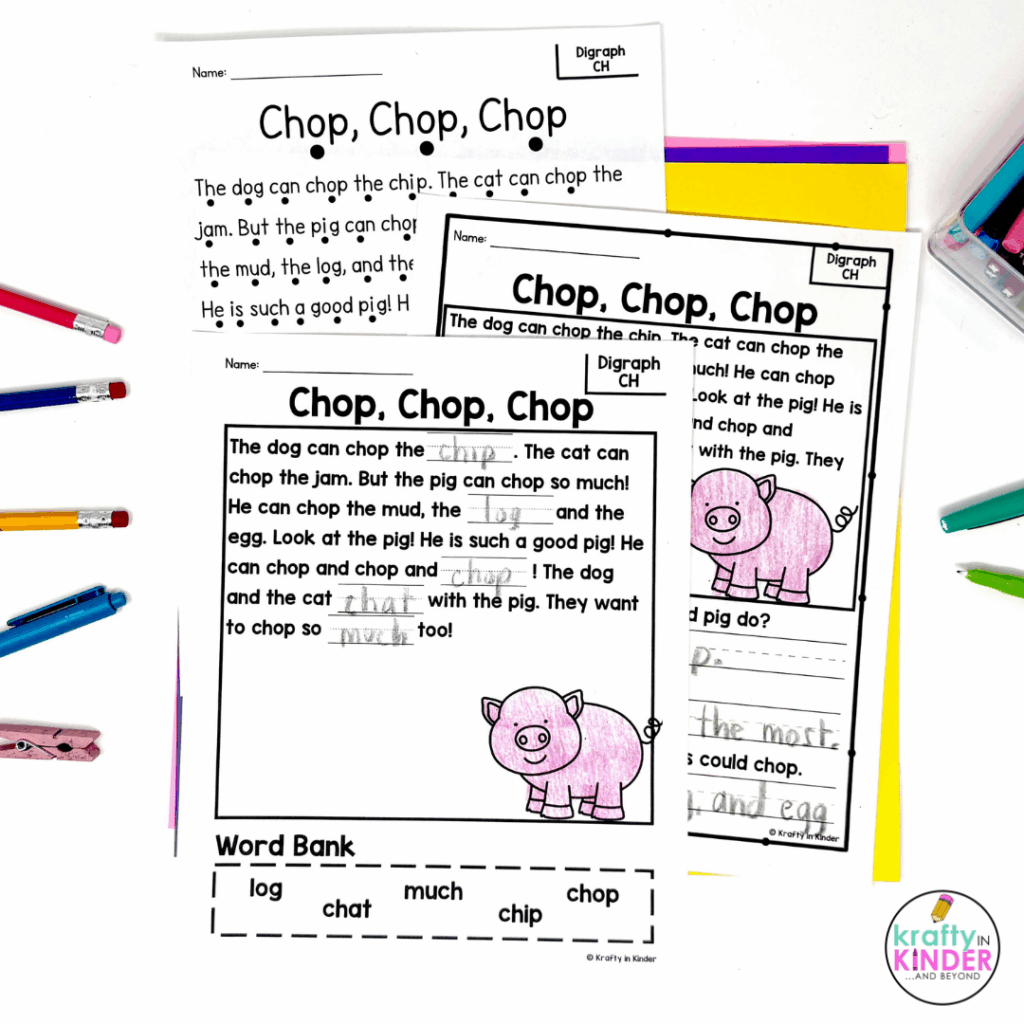
They’re super kid-friendly too! On the reading passage itself, there’s a clear focus at the top, and the entire passage is decodable, which means every word is either a review word, a high-frequency word, or part of the target phonics skill. No more frustrating passages!
Using These Decodable Digraph Texts
Beyond the passages, you will find 2 more scaffolded activities that you will use over the course of a few days to get the decodable digraph practice that is needed for success! This tried-and-true method works so well for various phonics skills, including digraphs!
Day One
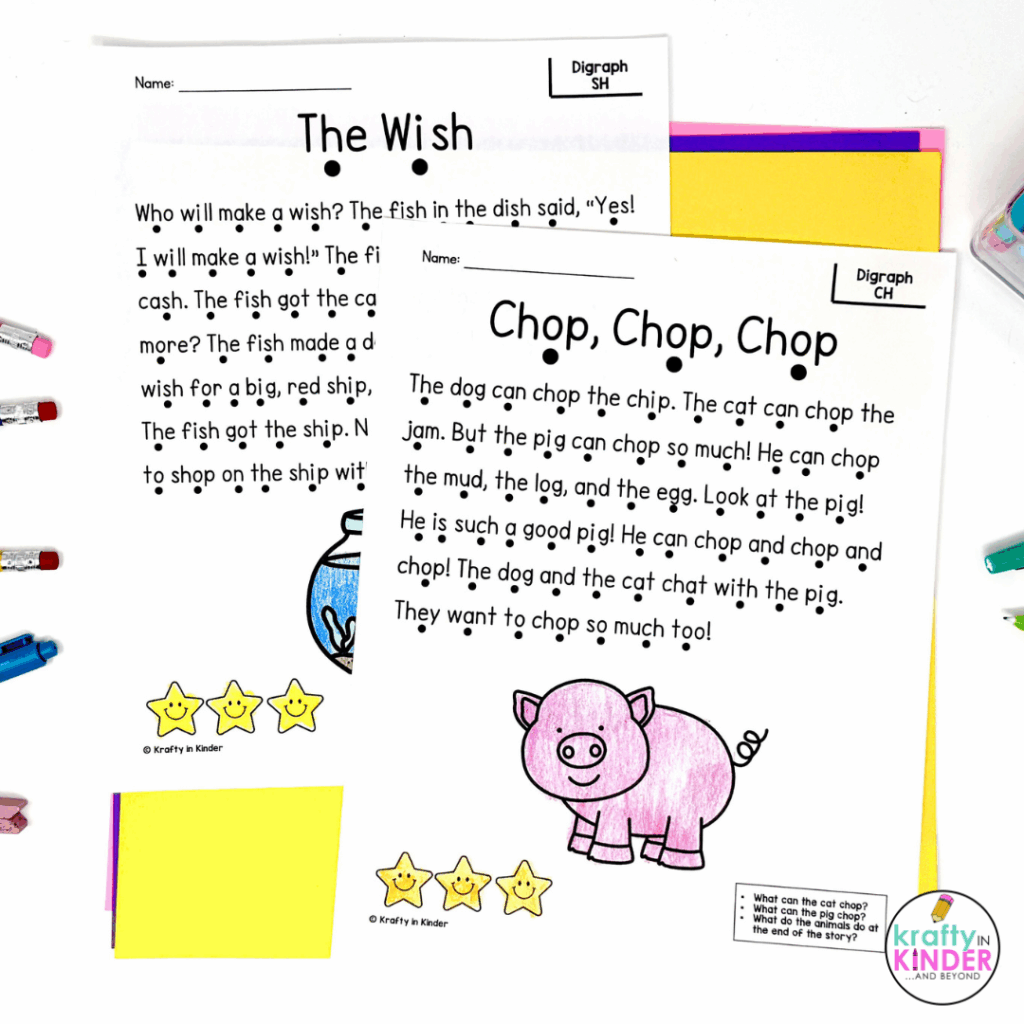
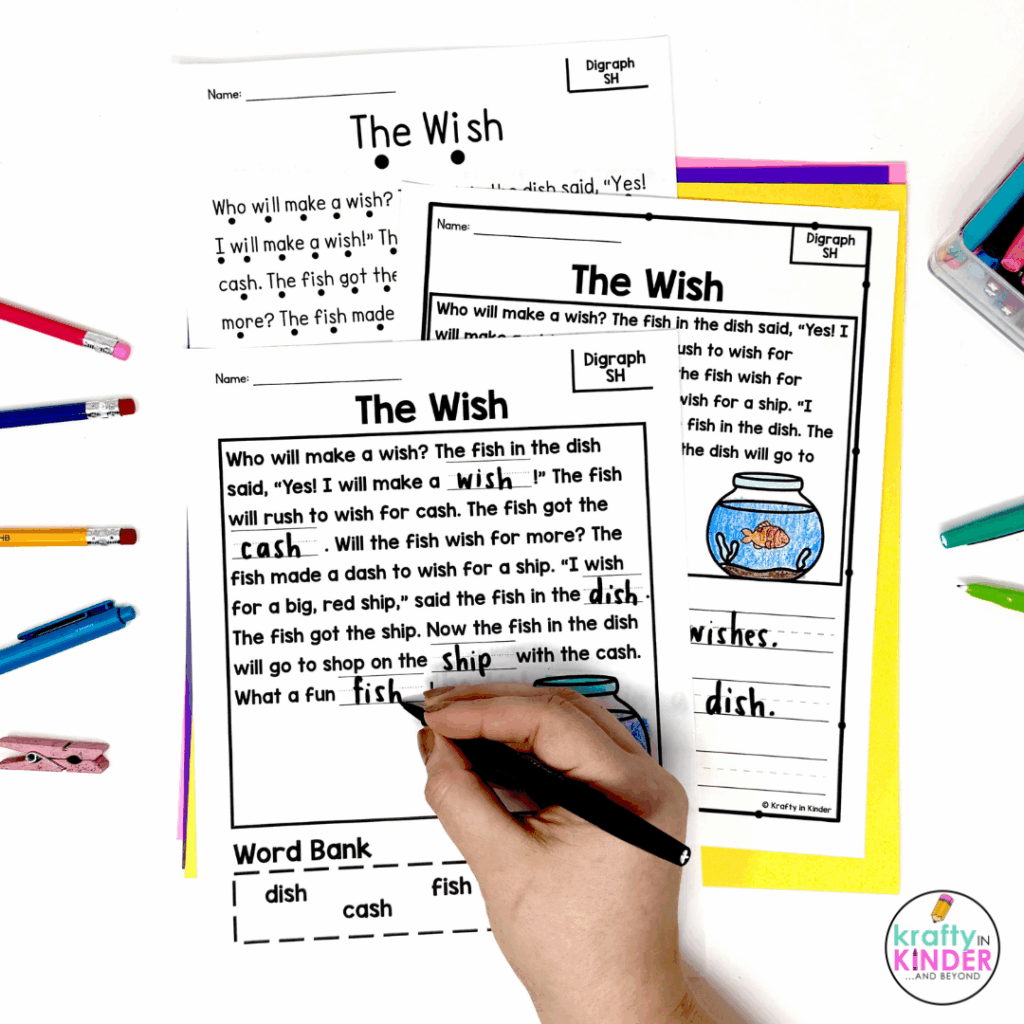
On day one, students will read the reading passage. I like to complete this first day as a whole class. The reading passage page includes reading dots to assist with reading and separating words. The students touch each dot as they read to keep track of where they are while reading.
First, we read together as a class a time or two. The goal here is to help my students become familiar with the words and spelling patterns in the passage. After a our group reads, we will often read these again in small groups, and I also send them home for additional practice.
Day Two
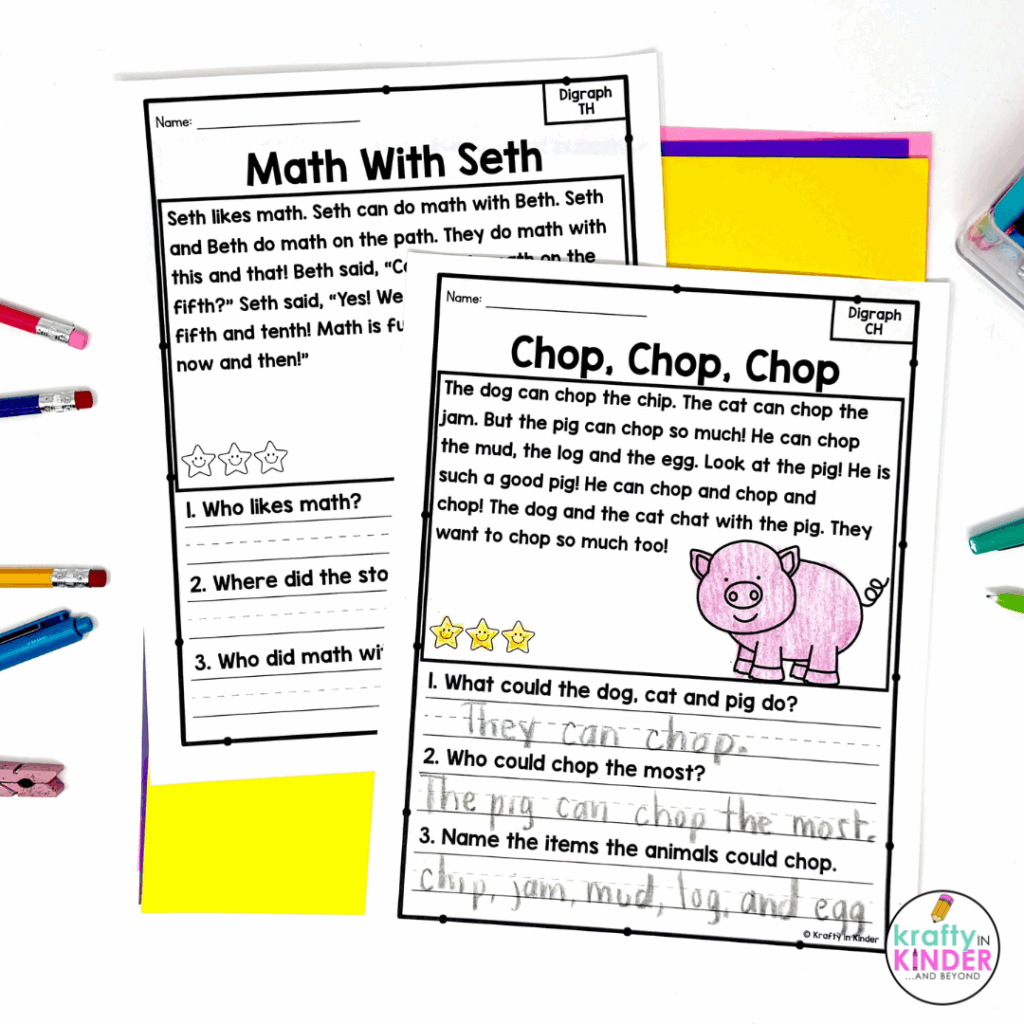
Next, on day two, they read the passage again and answer some comprehension questions. This time, they get a new sheet of paper with the passages and questions together. As they read, students will highlight or circle words with the focus digraph. After that, I have them answer some follow-up questions. I love to complete these pages in small groups so that we can talk through them together.
Day Three
On day three, they try to make sense of it all with some cloze reading activities. The worksheets we use for this step ask students to use a word bank to fill in missing words from the same original story. To be successful, this must be done last, once students are very familiar with the digraph. This last activity is usually the students’ favorite. I love watching them decode the sentences and add words in the correct spaces!
The Three-Step Process that Really Works!
I have found that these decodable digraph practice texts used in this step process are so effective in building confident readers! You can head over to TPT to grab the Decodable Readers with Digraphs and simplify this process in your classroom. Trust me, it will be a total game-changer for your students!
More Decodable Digraph Practice Activities
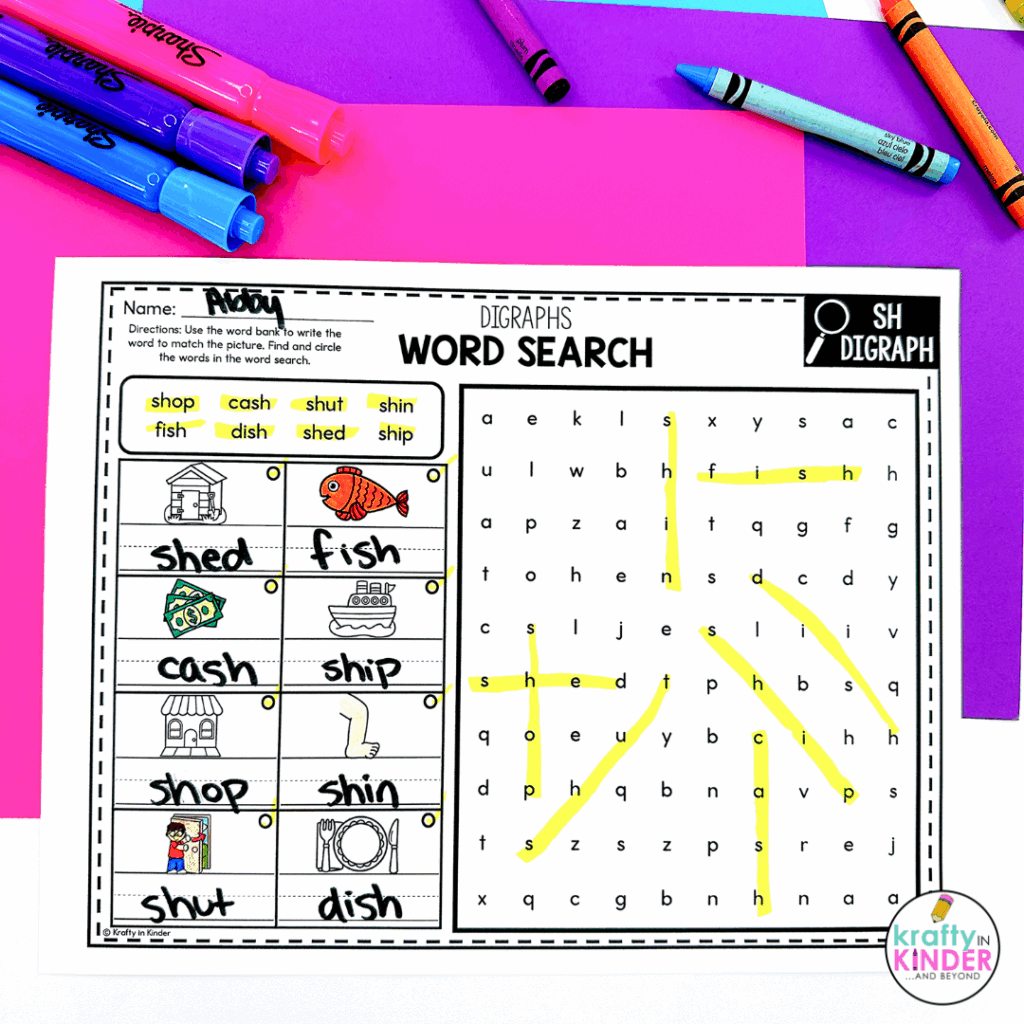
Beyond our decodable reading passages that offer an excellent way to work on using digraphs in context, I love to weave in some additional word work practice activities. The goal here is to keep everything decodable and only use words that have already been introduced. Remember, that’s key to ensuring your kids can build confidence and fluency, after all!
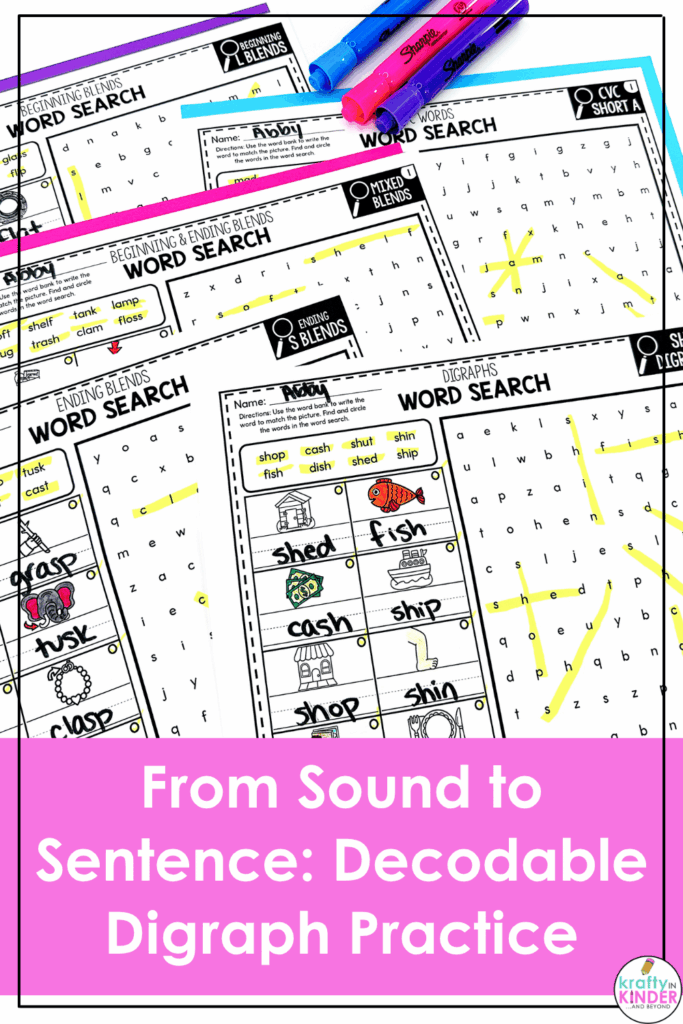
I love to use the Digraph Word Searches in this resource to fill this need. They’re a no-prep, engaging way to continue practicing with digraphs. Each page includes a focus digraph at the top, along with a word bank, a word search, and a section to write. Students are tasked with reading the words in the bank and then finding them in the word search. After they circle it, they write the word under the corresponding picture. There are 7 different digraph word searches included in this resource, along with 33 others that align with other phonics skills.
These are perfect to add just a little more support to your lessons and practice in a fun way. Once students know how to use these pages, they can be fully independent. Use them for center time, independent learning, fast finishers, morning work, and more!
Wrap-Up: Helping Kids Move from Sounds to Fluent Reading
Phonics instruction doesn’t stop at the sound level. When students practice digraphs in connected, meaningful reading, they start to understand how those sounds come together to create real stories, and that’s where the magic happens! So the next time you’re planning your phonics block, remember:
- Isolated sound practice is the start, but not the finish line.
- Decodable passages build decoding skills, fluency, and confidence.
- Word work (like word searches) reinforces pattern recognition.
- A mix of reading, writing, and speaking builds confident readers.
Ready to get started? Grab my Decodable Digraph Passages and Phonics Word Searches to make digraph reading feel simple and successful for your students.


Missed the Other Digraph Posts?
This post is the third one in my digraph series. Catch up on the others by clicking below:
- Part 1: How to Introduce Digraphs in the Primary Classroom
- Part 2: Engaging & Interactive Digraph Practice for Centers and Small Groups
Save This Post
Make sure to pin this post on Pinterest so that you can come back to it when you’re ready to tackle digraphs in your classroom!